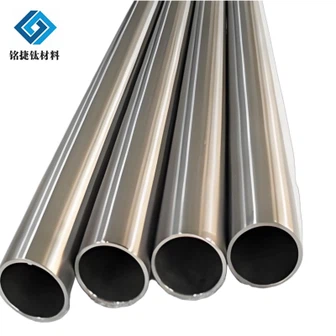
Is titanium stronger than steel?
In general, titanium has a higher strength-to-weight ratio and excellent corrosion resistance, making it "stronger" in many weight-critical applications, such as aerospace. However, steel generally has a higher absolute tensile strength, meaning that if weight is not a primary consideration, a steel component can withstand greater forces before breaking. The "stronger" material depends on the requirements of the specific application.

Comparison of Tensile Strengths between Titanium and Steel
However, titanium has an advantage over steel in terms of tensile strength. Titanium has an ultimate tensile strength of approximately 63,000 psi, while steel's ultimate tensile strength is closer to 50,000 psi. Therefore, titanium can withstand greater strain than steel before cracking.
Comparison of compressive strengths between Titanium and Steel
On the other hand, steel has an advantage over titanium in terms of compressive strength. Steel has a compressive strength of approximately 50,000 psi, while titanium has a compressive strength of approximately 40,000 psi. This means that only one material will deform under pressure exceeding a certain limit: steel, not titanium.
Comparison of yield strengths between Titanium and Steel
However, aside from yield strength, the two metals are nearly evenly matched. Titanium's yield point, or yield stress, averages around 40 psi, while mild steel's yield point, or yield stress, ranges from around 30 psi to as high as 60 psi. This indicates that even at the points of stress, the two metals exhibit similar behavior.

So, Which One Is Stronger?
So then does Titanium win over Steel? It is not such an easy answer because it depends on what kind of "strength" you are asking about. Titanium has greater tensile strength while steel has higher compressive strength. But for the yield points, these two metals are equals.
Choose Titanium for:
Applications requiring exceptional strength with minimal weight, such as aircraft parts, spacecraft, high-performance bicycles, and medical implants.
Choose Steel for:
Applications where cost is a primary concern and maximum absolute strength is needed, such as structural components in buildings or general engineering projects where weight isn't a limiting factor.
Why don't we use titanium instead of steel?
Titanium is superior in strength to steel, but much lighter too and is malleable. It can stretch during machining and is prone to wearing down the tools used in Mills. Adjustments to the angle that these tools cut the titanium to the changes to the coolant and pressure used to keep the debris or chips from collecting.

Does titanium rust like steel?
Being more resistant to rust and corrosion than other metals and metal alloys, common titanium used today has the appearance of not rusting or corroding and is more durable and longer-lasting than other metals.
So, if you have any needs for pure titanium or titanium alloys, Mingjie can provide high-quality titanium products. If you are interested, you can visit our company website www.major-ti.com at any time to browse the product details and information.