Analysis of creep performance and smelting process of TC4 titanium alloy
Titanium alloys are widely used in aerospace, medical device, and chemical industries, especially theTC4 titanium alloy has become a key material in these fields due to its excellent comprehensive properties. This article focuses on analyzing the creep properties of TC4 titanium alloy and its smelting process, and discusses the key factors affecting its properties.

1. Basic composition and microstructure of TC4 titanium alloy
TC4 titanium alloy (also known as Ti-6Al-4V alloy) is mainly composed of titanium (Ti), aluminum (Al), and vanadium (V), with aluminum content of 6% and vanadium content of 4%. This alloy belongs to the α+β type titanium alloy and has excellent comprehensive mechanical properties. At room temperature, TC4 titanium alloy mainly exhibits a structure in which α and β phases coexist at room temperature,but its microstructure will change significantly under different heat treatment and processing conditions.
Microstructure significantly affects the creep rupture properties of TC4 alloys. By controlling the as-cast or forged microstructure and adjusting the distribution and morphology of the α and β phases, the creep strength and ductility of the material can be effectively improved. Studies have shown that the creep rupture properties of the alloy are optimal when the α phase is uniformly distributed and small in size.

2. Analysis of the creep performance of TC4 titanium alloy
Creep strength is a property of a material that maintains its strength for an extended period under high temperature and stress, and it is particularly important for applications in high-temperature and high-pressure environments such as aerospace. TC4 titanium alloy maintains good creep strength at temperatures below 500°C.
Experimental data shows that TC4 alloy exhibits a creep rupture strength of up to 550 MPa at 400°C, demonstrating good creep resistance. At 500°C, the creep rupture strength decreases to 400 MPa, but it still exhibits good high-temperature stability. At 650°C, the creep rupture strength rapidly drops to 250 MPa, indicating that TC4 alloy no longer offers a significant advantage in high-temperature creep rupture performance above 600°C. Therefore, TC4 titanium alloy is more suitable for use in working environments between 400°C and 500°C.

3. The Influence of Melting Process on the Properties of TC4 Titanium Alloy
The smelting process is one of the key factors determining the properties of TC4 titanium alloys. Common smelting methods include vacuum arc remelting (VAR) and electron beam melting (EBM). Different smelting processes have a significant impact on the purity, microstructure, and inclusion content of the alloy.
VAR melting: This process is carried out under vacuum conditions, which can effectively reduce gas inclusions and produce high-purity titanium alloys. TC4 alloys produced by VAR melting have a fine and uniform grain structure and good creep resistance. However, due to the slow cooling rate, the grains may be too large, thus affecting the alloy's mechanical properties.
EBM melting: Electron beam melting has higher energy density and faster melting speed, which can significantly reduce the gas and impurity content in the alloy. TC4 alloy produced by EBM melting has finer grains and better durability, but the equipment cost is higher and the production process is relatively complex.

4. Control of oxygen content during smelting
Oxygen content has a direct impact on the properties of TC4 titanium alloy. Studies have shown that for every 0.1% increase in oxygen content, the alloy's strength can increase by approximately 100 MPa, but its toughness decreases significantly. Controlling the oxygen content during the melting process is key to improving the overall performance of TC4 titanium alloy. In VAR melting, the alloy's oxygen content is generally controlled below 0.1%, while in EBM melting, due to its higher vacuum level, the oxygen content is typically even lower.
In actual production, by optimizing the smelting process, such as increasing the number of refining cycles or adjusting the smelting atmosphere, the oxygen content can be further reduced, thereby improving the toughness and durability of the alloy.

5. The Influence of Alloy Purity and Inclusions on Performance
Alloy purity and inclusion content are crucial factors determining the creep rupture properties of TC4 titanium alloys. The presence of inclusions such as oxides and nitrides can lead to stress concentration at high temperatures, thereby reducing their creep rupture performance. By optimizing the smelting and refining processes, the inclusion content can be effectively reduced and the alloy purity increased, thus significantly improving the creep rupture properties of TC4 titanium alloys.

6. Optimization of creep performance through heat treatment processes
Besides the smelting process, heat treatment is also a crucial step in improving the creep retardation properties of TC4 titanium alloy. Common heat treatment methods include annealing, quenching, and aging. Proper heat treatment can optimize the alloy's microstructure, reduce residual stress, and improve its overall performance.

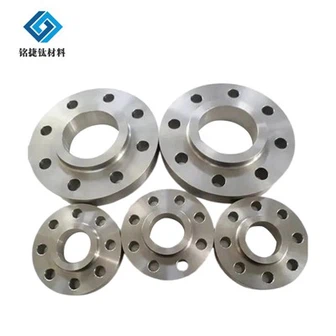
Baoji Mingjie Titanium Materials Technology Co., Ltd. provides high-quality titanium materials, including titanium plates, rods, wires, and flanges in various specifications. Our products meet diverse standards and specifications, suitable for various industries and fields. We have professional production equipment, modern production workshops, and an experienced engineering team. We strictly control product quality and offer the most competitive prices. If you have any titanium product needs, please feel free to visit us and place an order. We are dedicated to providing you with one-stop service. Welcome your inquiries!

aggieliu@major-ti.com
Tel: +86 15209172206
www.major-ti.com
Wechat: 15209172206 aggieliu166