What are the stages of titanium ingot melting and casting process
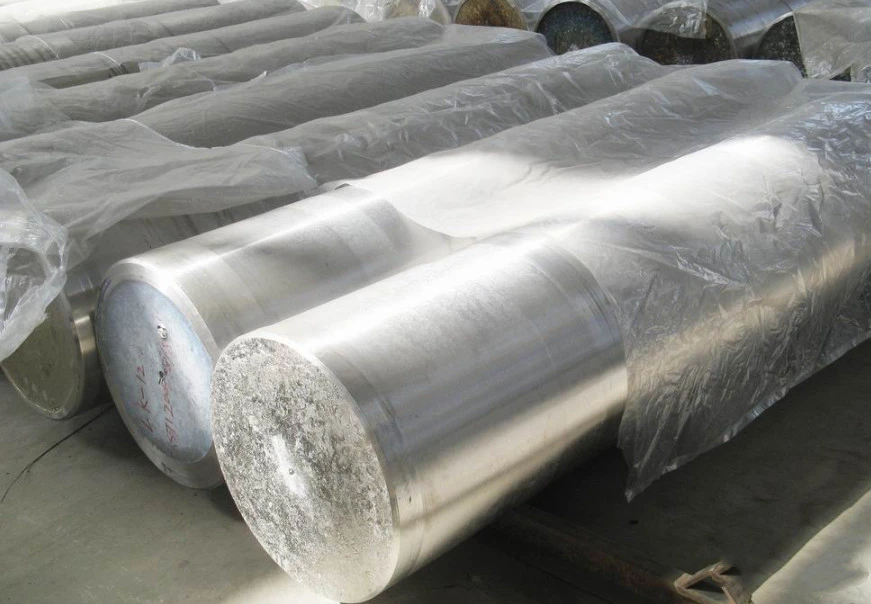
The smelting process of titanium ingot is generally divided into three stages, one is the batching, the second is the bundle of electrodes, and the third is the melting casting.
I. Ingredients
Titanium alloys determine the proportion of alloying elements according to the following principles:
(1) The allowable fluctuation range of alloying element and impurity content and the optimum composition range required for the best performance of the alloy;
(2) smelting method and smelting frequency;
(3) the burn loss rate and evaporation rate of alloying elements in the true blank loss melting process;
(4) The addition method and physical properties of alloying elements.
Under normal circumstances, the burning rate is large, volatile elements, the proportion of ingredients close to the upper limit or exceed the upper limit, and the elements not easy to volatile loss are in the middle of the required range of ingredients.
2. Electrode block pressing
Consumable smelting electrode requirements are mainly:
(1) sufficient strength;
(2) adequate electrical conductivity;
(3) Flatness;
(4) The distribution of alloying elements in the electrode is reasonable;
(5) free from moisture and pollution.
Single electrode preparation methods are pressing (and discrete pressure and transverse pressure) and extrusion (and horizontal and vertical) two categories, the more commonly used is the pressing method.
The density of the electrode block is related to the material being pressed. Generally speaking, the density of the electrode block is greater than 3.2g /cm3 to meet the smelting requirements. Generally, the press with a pressure of 300 ~ 500MPa is used.
Electrode assembly welding is to assemble a single pressed electrode block into an electrode with the required section and length for consumable arc melting. In industry, argon shielded plasma welding, vacuum plasma welding and electron beam welding are often used. In order to prevent the inclusion of high specific gravity, argon tungsten arc welding is generally not used. The purity of argon for welding is 99.99%.
3. The completion of the charge melting stage from the beginning of electric transmission melting to the full melting of the charge (except for the solid arch bridge above the melting pool) is called the charge melting stage. At the beginning of smelting, the specific resistance of the newly added charge is larger, the electrode is in direct contact with the charge, and the charge is heated by the resistance heat of the charge. At this time, the input current is small but relatively stable, and the resistance heat is dominant during this period. However, this period of time is not long, when the charge under the electrode melts to form three "crucible melting pools", the arc heat generated between the electrode and the "crucible melting pool" heats the charge so that the melting pool gradually expands outward until a "large melting pool" is formed to communicate three electrodes. During the transition from "crucible melting pool" to "large melting pool", due to the reduction of unmelted charge part, its specific resistance gradually becomes smaller, so the resistance heat of charge gradually decreases. The proportion of arc heat output between the electrode and the "crucible melting pool" gradually increases. Arc heat dominates after about half an hour from the start of smelting. The above "transition period" is the unstable period of smelting high titanium slag, first because the resistance of the current through the line (electrode → crucible melting pool → unoxidized charge → crucible melting pool → electrode) changes with time; Second, the solid material above the "crucible melting pool" often falls into the melting pool, causing a fierce reaction and boiling the slag, and this phenomenon of "collapsing slag boiling" is irregular.