Titanium plate welding cracking? Hydrogen is the culprit! 3 tricks to solve the problem.
In high-precision fields such as aerospace and medical, titanium plates and titanium-steel composite plates have become indispensable key materials due to their high strength, lightweight, and excellent corrosion resistance. However, in practical applications, the welding process frequently fails-cracks and defects occur frequently, affecting not only product quality but also posing potential safety hazards. Today, we will delve into the causes of welding cracks in titanium plates and offer practical solutions to help you overcome this technical bottleneck!

I. Uncovering the Culprit Behind Cracks: 3 Key Factors That Cannot Be Ignored
a. Analysis of the causes of cold cracking in titanium welds
Hydrogen: The core cause of cold cracking
Hydrogen is a key factor initiating cold cracking in titanium welds, primarily entering the welding process through two pathways: first, moisture and oil contaminants in the plate and welding wire release hydrogen during welding; second, increased ambient humidity increases the hydrogen content in the weld. The high welding temperature causes hydrogen to dissolve in the molten pool, but its solubility drops sharply upon cooling. If cooling is too rapid, hydrogen cannot escape, leading to hydrogen supersaturation in the weld. This supersaturated hydrogen continuously diffuses, weakening the material structure and creating a breeding ground for crack formation.

hot cracksacks cold cracks
b. The dual threat of the gap effect and high hydrogen concentration
When there are gaps in the weld, local stress concentration occurs; at the same time, high hydrogen concentration reduces the toughness of the material. The combined effect of these two factors significantly inc
reases the risk of cracking, like "adding insult to injury" to a fragile weld, greatly increasing the probability of cracking.

c. Special challenges of winter construction
Low-temperature environments make it easier for water vapor to adhere to the surface of titanium plates, exacerbating hydrogen accumulation in the weld. This is especially true for thin titanium plates (such as 1.2 mm thick), where slow heating leads to excessively rapid cooling, preventing residual hydrogen from escaping in time. This hydrogen is forced to remain in the weld in a supersaturated state, ultimately causing cracks.

2. Solving the Crack Problem: 3 Practical Methods You Should Keep in Mind
a. Surface cleaning: Blocking the initial hydrogen permeation pathway
Before welding, the base material and welding wire surfaces must be thoroughly cleaned; this is the core measure to cut off the hydrogen input source. Methods such as mechanical grinding or chemical cleaning can be used to completely remove residual moisture, oil, and other impurities from the surface, ensuring the material is dry and clean, creating ideal conditions for subsequent welding.

b. Environmental Management: Constructing a crack-resistant microenvironment
The ambient temperature must be maintained above 5℃ during welding, which is a basic requirement for preventing cracks. In low-temperature conditions in winter, the environment can be improved by preheating the base steel surface with a flame: this can evaporate the moisture around the weld, reducing hydrogen generation; it can also increase the temperature of the weldment, slow down the cooling rate, provide sufficient time for the natural escape of hydrogen, and prevent supersaturation accumulation.

c. Process Adjustment: Reduce risks through parameter optimization.
Scientific control of welding parameters is a key means of suppressing cracks. For example, by setting the current, voltage, and welding speed appropriately, the cooling rate of the weld can be precisely controlled. By optimizing process parameters, the cooling process is made more stable, and the hydrogen escape window is extended, thereby significantly reducing the probability of cracking from a technical perspective.

The above are common problems in titanium alloy welding and methods to improve them. However, Baoji Mingjie Titanium Materials Technology Co., Ltd. supplies the best titanium alloys and materials, exporting globally, with top-quality products.Because the welding technology of Baoji Mingjie Titanium Material Technology Co., Ltd. is led by a team of experienced masters who are proficient in the titanium alloy welding process, which can effectively control the hydrogen content and cooling speed, reducing the risk of cold cracks. The company adopts three measures: surface cleaning, environmental control (such as winter preheating) and process optimization (parameter control) to ensure the quality of welds.
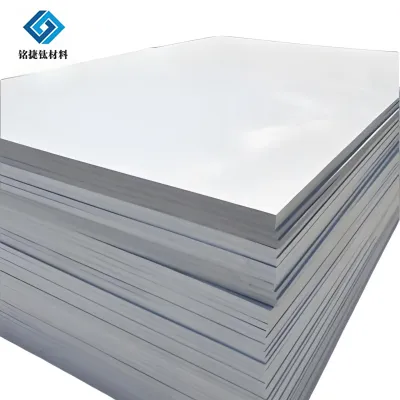
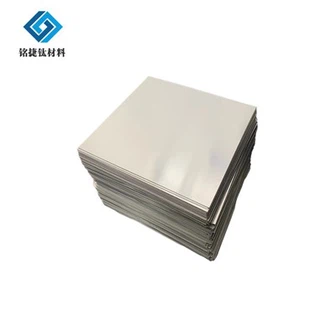
By the way ,our main product titanium plates (such as TC4, TA1/TA2 grades) have high strength, corrosion resistance, and a thickness of 0.5-60mm, which is suitable for aerospace, chemical and other fields. The process adopts vacuum melting and precision rolling, and the quality is strictly controlled, which meets industry standards.
And our price is competitive, and we supports on-demand customization to meet the special specification needs of customers. Our company is guided by "customer satisfaction" and provides one-stop service from design to production.
Need a specific welding parameter or titanium plate selection guide? We can help you quickly match application scenarios and process requirements.
Please feel free to contact us with any questions. We welcome your inquiries and orders!