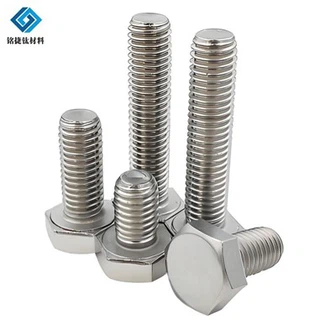
the report of tensile properties and melting point of TA1 titanium alloy
1. Basic introduction of TA1 titanium alloy
TA1 titanium alloy is an industrial pure titanium with excellent corrosion resistance and high strength-to-weight ratio. It is widely used in aerospace, chemical industry, medical and other fields. Its typical composition is a titanium content of ≥99.6%, and the content of impurities such as iron and oxygen is strictly controlled to ensure its high purity and excellent mechanical properties. Due to the stability of titanium alloys in high temperature and corrosive environments, TA1 has been widely used in applications that require light weight and high strength.
Chemical composition
Titanium (Ti): more than 99.6%
Oxygen (O): ≤0.15%
Nitrogen (N): ≤0.03%
Hydrogen (H): ≤0.015%
Iron (Fe): ≤0.2%
2.Tensile strength
Tensile strength is a measure of a material's ability to withstand tensile stress. tensile performance is an important indicator for TA1 titanium alloy, and its tensile strength is mainly influenced by factors such as alloy purity, processing technology, grain size, etc.
The tensile strength of TA1 titanium alloy is approximately 345 MPa, lower than other titanium alloys with more alloying elements, but it has better ductility and toughness. Compared to other titanium alloys, the yield strength of TA1 is lower, approximately 275 MPa, but it has greater ductility and impact resistance, making TA1 alloy suitable for applications requiring higher toughness.
Tensile strength: ≥345MPa
Yield strength: ≥275MPa
Elongation: ≥30%
3.Tensile test conditions
To obtain accurate tensile attribute data, standard test conditions for tensile tests are usually required. A typical tensile test temperature is the room temperature (20℃), and the samples tested are usually cylindrical or rectangular, carried out according to international standards. The changing detection data is closely related to the processing technology of the sample, the surface condition, and the heat treatment process.
Temperature affects the properties of stretching
As the temperature increases, the strength of titanium alloys usually decreases, but TA1 titanium alloys may still maintain relatively good tensile strength at higher temperatures. For example, at 300℃, the tensile strength of TA1 titanium alloy may be reduced to 300MPa, but it can still maintain a high extension. Due to its superior high temperature properties, this alloy is usually used in medium temperature and high pressure conditions.
Elongation and tensile properties of fracture
The elongation to breaking TA1 titanium alloy is usually higher than 30%, indicating that it has good ductility and has the ability to withstand the deformation of the deformation under tensile loading. High ductility is an important characteristic that distinguishes TA1 alloy from other high-strength titanium alloys. Its high extension means that the gold can continue to withstand the load even if minor cracks occur, if it does not break immediately.
4. Influencing factors of the tensile properties of TA1 titanium alloy
purity:The purity of titanium alloy has a significant impact on the tensile properties of TA1 titanium alloy. High purity results in better tensile properties of TA1 titanium alloy. Impurity elements, such as oxygen and nitrogen, usually increase the strength of titanium but reduce its ductility and toughness. When the oxygen content is high, although the tensile strength increases, the elongation decreases significantly. Therefore, it is essential to strictly control the content of impurities produced in the production process of TA1 titanium alloy.
The effect of oxygen content on tensile strength: For every 0.1% increase in oxygen content, the tensile strength increases by about 40 MPa, but the elongation decreases by about 10%.
Grain size:Controlling grain size is also a key factor affecting the properties of stretching. Generally speaking, the smaller the particle size, the higher the tensile strength, but the delay may be reduced. The grain size can be adjusted by heat treatment or deformation of the plastic to optimize the tensile properties of the alloy.
Effect particle size in tensile properties: Smaller particles help to increase strength, but may cause increased brittleness under certain conditions.
Heat treatment:The tensile properties of TA1 titanium alloy can also be optimized by heat treatment. Retreat treatment can eliminate the internal pressure of the material and increase its toughness. With proper heat treatment, the tensile properties of TA1 alloy can be significantly improved, especially under high temperature conditions.
The effect of retreat treatment: eliminate internal pressure and improve ductility and toughness of materials.