Is titanium hard to procsss?
Since the discovery of titanium in 1790, humanity has embarked on a century-long arduous quest to harness its extraordinary properties. While titanium metal was first produced in 1910, the road to its application was long and arduous, with industrial production not finally achieved until 40 years later, in 1951.
Titanium alloys offer high specific strength, corrosion resistance, high temperature resistance, and fatigue resistance. A titanium alloy of the same size weighs only 60% of steel, yet boasts greater strength than alloy steel. Due to these excellent properties, titanium alloys are finding increasing application in aviation, aerospace, power generation equipment, nuclear energy, shipbuilding, chemical engineering, and medical devices.
But why is titanium difficult to process, let us explore the secrets together!

First, although titanium is not a particularly hard or tough metal, it has the special property of being extremely poor in thermal conductivity. This means that when cutting tools cut materials, the heat generated is not dissipated or dissipated, but rather heats the tool. Steel cutting tools lose strength at high temperatures, while titanium loses strength more slowly, so steel cutting tools become dull, generating more heat and further reducing the strength of steel. As a result, steel cutting tools tend to quickly wear down their cutting edges. The heat generated during the machining process is carried away by the cutting tool, rather than by the chips. Tungsten carbide (WC) is a substitute for carbonized tungsten, which can maintain its strength even at a red-hot state. When cutting titanium, using WC and carefully selecting speed and feed are necessary conditions for achieving efficient machining.
Others have already mentioned the major issues with titanium machining, but there's one issue that hasn't been addressed. The swarf (chips) produced by titanium machining are extremely flammable, and once a fire starts, it's almost impossible to extinguish! Considering that many aerospace products remove over 70% of the raw material, this means a significant amount of swarf is left in the work area.
If these items ignite for any reason, it becomes a Class D fire, meaning water and CO2 extinguishers will actually fuel the fire! You must use a Class D extinguisher to extinguish this fire, and you must act quickly. This fire is extremely hot and can damage any machine parts it comes into contact with, such as the machine base.
I was in a shop, and a machinist was turning a titanium shaft, using a tool tip as thin as a human hair. He took a piece of the turning, about eight inches long, and set it on fire. Even that small piece caught fire! It looked like a white hot spot suspended in the air, with a small plume of white smoke rising.
There was another time when some titanium metal powder remained on the ground after being washed by wastewater flowing out of the water pipe at the door of our workshop. One sunny day, the sun was very strong and the temperature was very high. A worker happened to throw a cigarette butt on the ground, and instantly the titanium metal powder remaining on the ground burst into flames, with flames burning like fireworks. I suddenly felt that I really needed to be careful about this, it was too dangerous.
Therefore, in addition to other processing issues, you must also be very careful with chips and pay attention to preventing fires to avoid causing safety losses to the workers of the workshop machine tools and other equipment.
Because of these characteristics of titanium, I have summarized the reasons why titanium is difficult to process as follows:
1.) Titanium is flammable. It's just as inflammable as magnesium, except that it melts and forges at higher temperatures. In ordinary air, molten titanium will catch fire, and it can't be extinguished with water, steam, or even carbon dioxide, because it will burn on contact with water, steam, or carbon dioxide. Alternatively, in nitrogen, titanium is also flammable even in dry nitrogen. You need argon to prevent it from igniting, and argon costs $3 per cubic foot. That means it would cost $3,000 just to vent the air from a 10' x 10' x 10' work chamber, and you have to maintain positive pressure throughout the heating process.
2.) Titanium forms an oxide film immediately when exposed to oxygen, making it difficult to forge except in an argon atmosphere filled with thousands of dollars worth of magic gas.
3.) Steel can harm titanium. It's truly terrifying: the rubbing marks of steel tools will leave black marks on dry, room-temperature titanium, causing blisters to form and begin to ooze dust. The iron in the steel forms ferro-titanium, which, in contact with oxygen, cannot form a stable oxide film. This ultimately catalyzes the complete destruction of the titanium alloy, slowly burning into titanium dioxide-cubic monoclinic titanium dioxide, a superhard ceramic powder that can contaminate bearings and scratch seals. Manufacturers have learned to clean titanium with pickling solutions after *every* forming and handling step to prevent it from rubbing against the ubiquitous A36 steel in the production environment. And each pickling process costs money...
4.) In the past, titanium smelting consumed a significant amount of electricity, even more than producing the same mass of aluminum. In recent years, smelters have found ways to reduce costs, such as adopting hybrid electrochemical processes like carbochlorination reduction, and learning to sinter titanium rather than melt it to save energy.
5.) Pure titanium wears easily and performs poorly. Even when not subjected to repetitive stress, it tends to crack near pierced holes and cut edges. Therefore, most titanium alloys are 90% titanium with toughening elements added to control cracking. A typical alloy is 90% titanium, 4% aluminum, and 6% vanadium. This vanadium is not the metallurgical grade 95% vanadium used by steel mills (at $20 per pound), but rather 99.94% laboratory grade vanadium (at $1,500 per pound).
Even though titanium is so difficult to process, our company Baoji Mingjie invites senior technical experts as technical guidance, has a professional titanium processing team, and high-tech titanium production equipment.
Baoji Mingjie Titanium Material Technology Co., Ltd. is a comprehensive enterprise specializing in the processing and sales of titanium and titanium alloy materials. Its professionalism and product quality are reflected in the following aspects:
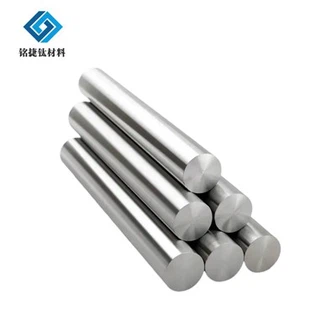
1.Production equipment and technical team.Our company has professional production equipment and technical team, focusing on the processing of titanium and titanium alloy plates, rods, wires, cakes, rings and other products.
The technical team is composed of young, innovative and experienced members with material processing and R&D capabilities, providing technical support for chemical, aviation, aerospace and other fields.
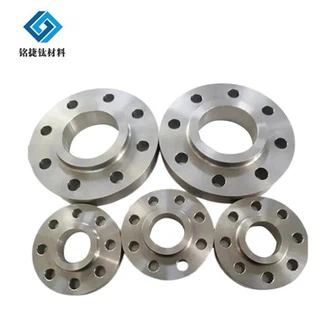
2. Our main products include titanium craft products, standard parts, titanium surgical implants, etc., covering multiple industrial fields.
The company takes "product quality first" as its business philosophy, focuses on customer satisfaction and pursues brand benefits.
Our company provides high-quality titanium products and industry solutions through professional equipment, technical team and strict quality management.