3D-printed Titanium Casing! Apple's New Process Is Amazing: It's Not Just Changing The Watch.
Unbeknownst to many, Apple has done another big thing.
A while ago, Apple proactively "revealed" that it used a new "titanium printing" process in its products with titanium frames, such as the Apple Watch Ultra 3, and even released a special promotional video for this process, which was not seen for a long time.
Judging from the "direct effect" of this publicity, this process upgrade seems to be a bit "unsatisfactory", after all, most Apple Watch Ultra users are not aware that Apple has adopted a new manufacturing process, and it is even more difficult to perceive the "technical optimization" brought about by the process upgrade.

However, in Xiaolei's view, this kind of process innovation that is "difficult for users to detect the difference" just highlights the success of Apple's titanium printing process - achieving the same product performance at a lower cost, greatly improving the yield rate, and significantly reducing raw material waste.
So, what is special about this titanium manufacturing process, called "3D printing"?
There are significant differences from common 3D printing technologies on the market
If the "titanium printing" promoted by Apple is placed in the entire 3D printing technology system, although it belongs to the category of additive manufacturing, it is by no means the same type of process as the 3D printing recognized by the public and the technology actually used by Apple.

Typically, mainstream 3D printing technologies are divided into hot melt extrusion (FDM) and light curing molding (SLA). The difference between the two is obvious: the former uses coiled "plastic" wires (such as PLA) as consumables, and the material is cured through the "heating-cooling" process; the latter uses a special photosensitive resin solution to cure with specific wavelength of light (mostly ultraviolet rays) at fixed points to build the model layer by layer.
The advantages of light curing (SLA) over FDM technology are prominent – the detail retention of the molded model far exceeds that of the FDM process. However, no matter how close the appearance of the light-cured model is to metallic texture, it is still a polymer structure with inherent flaws in terms of strength, high temperature resistance, and corrosion resistance. This technology is only suitable for styling testing and assembly verification, and cannot be used in the manufacture of actual products such as mobile phones and watch cases.
Speaking of Apple, the laser metal melting process (SLM) applied this time has a similar appearance to light curing technology, but its core technology is fundamentally different:

At its core, the laser metal melting process uses laser energy to melt metal powders and shape them layer by layer. Compared with SLA technology, the raw material of SLM is not resin liquid, but titanium powder with a diameter of only tens of microns. Its energy source is not ultraviolet, but multiple high-energy lasers; The final product is not a plastic model, but a metal structure that can be subsequently processed.
According to Apple, it strictly controls the diameter of titanium powder raw materials to ensure that the thickness of each layer is accurately controlled at 60 microns during printing; At the same time, the method of synchronous printing with multiple laser arrays is used to enable the titanium powder raw materials to form a continuous and dense metal structure structure.
However, the "printing" of metal additive manufacturing is only the starting point. There are still a small amount of pores and stresses inside the printed titanium structural parts, which need to be densified by hot isostatic pressing to make the internal structure close to the level of forgings. Its surface is also difficult to form at one time, and must rely on subsequent CNC finishing and polishing processes.

Can the laser metal melting process really open the era of "titanium"?
From the perspective of Apple's technological flow, the laser metal melting process is not a "ready-to-use technology", and the formed titanium structural parts still need to go through multiple processes such as hot isostatic pressing, CNC finishing, and polishing. Since the process is so complex, why did Apple still choose to put it directly into production? (According to Apple, all Apple Watch Ultra 3 and titanium case S11 cases this year are manufactured using a 3D printing process.)
The reason is simple: the laser metal melting process can significantly reduce material waste in the production process while increasing yield rates.
Traditional titanium machining relies on forging forming and must be cut from a billet that is much larger than the finished product. Titanium itself is difficult to cut and has poor thermal conductivity, and once the structure is complex, the yield rate of processing will "dive". In fact, the reason why digital products using titanium are expensive is that their uncontrollable processing costs account for the majority.

Laser metal melting technology overcomes the limitations of traditional metal processing: it eliminates the intermediate forming steps of traditional processes, completing most of the volume shaping during the printing stage, significantly improving material utilization. According to data released by Apple, this technology can save 50% of raw materials-equivalent to "producing two watches with the material that used to make one." Apple estimates that this new process has saved over 400 tons of titanium raw materials this year alone.
Besides saving raw materials, laser metal melting technology can also significantly improve the yield rate of titanium parts. Since the main structure has already been formed in the printing stage, subsequent CNC machining only needs to focus on precision and surface quality, and no longer undertakes large-scale material removal tasks, thus greatly reducing processing risks.

In addition, laser metal melting technology brings a degree of freedom to product design that is difficult to achieve with traditional processes.
For example, Apple's highlighted Apple Watch Ultra 3, with its complex curved surfaces facing great challenges in CNC machining systems, sometimes even requires multiple tool changes; The miniature size of the smartwatch also limits the internal machining path and sometimes requires customized special tools. However, the introduction of laser metal melting technology has broken the shackles of design from the engineering level, enabling special structures that cannot be achieved due to processing accuracy and cost issues.
Therefore, Lei Technology believes that if China's smartphone industry wants to truly follow the "titanium era" led by Apple in terms of materials, rather than just staying at the "titanium" surface treatment, it must introduce laser metal melting or laser sintering processes to treat this new material in a new way.
Can domestic mobile phones use laser metal melting process?
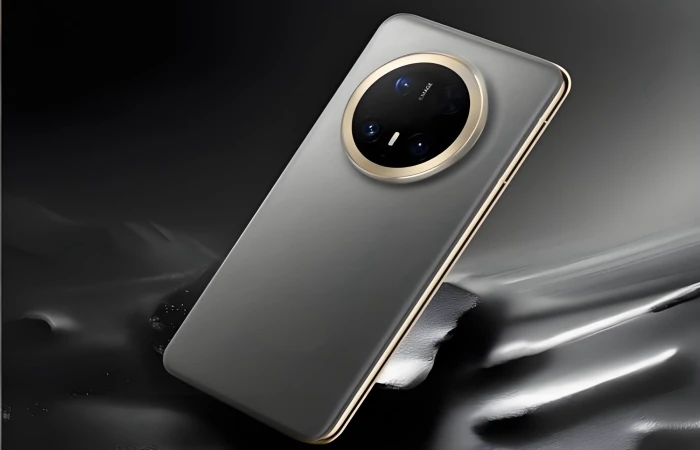
But the question also arises, since this is the key process of the "titanium era", why didn't domestic mobile phone brands follow up earlier?
If you want to say whether domestic brands have the ability to do laser metal melting process, the answer is of course yes. In the final analysis, the laser metal melting process is also a kind of metal additive manufacturing, and the domestic additive manufacturing industry chain is extremely complete: from titanium powder atomization equipment to laser metal melt molding machine, to the subsequent five-axis CNC and automatic inspection, the entire processing link has the ability to produce on a large scale. In other words, domestic manufacturers have the "industrial foundation" to make laser metal fused titanium middle frames, and there is no technical threshold.
The competition for resources within Android flagship phones is fierce, with core modules such as imaging systems, hinge structures, and fast battery charging all vying for limited budgets. Compared to upgrades that directly improve the user experience, the potential for value enhancement in titanium alloy frames is relatively limited. Although laser metal melting technology can be used to produce titanium frames and key components like foldable screen hinges, the production volume of hinge components remains negligible in terms of amortizing the cost of this process.
However, it must be emphasized that for domestic mobile phone brands aiming to penetrate the high-end market, laser metal melting technology remains a key area for development. This process breaks through the limitations of traditional forging and CNC machining, possessing greater versatility. It can be applied to small components such as watch cases and lens decorative rings, as well as to manufacture screen hinges and even larger components. In Lei Technology's view, this is not a far-fetched idea.

Where will Apple ultimately lead its material innovation for its devices? Based on the preceding analysis, the core issue lies in balancing technological innovation with mass production feasibility. While laser metal melting demonstrates advantages in titanium alloy processing, the rapid iteration and fragmented SKU distribution of Android devices make it difficult to amortize the cost of this process. However, for domestic manufacturers pursuing high-end breakthroughs, this remains a worthwhile differentiated path to explore. Apple's moves may reveal that the material revolution must ultimately return to the essence of user experience, rather than simply pursuing advanced manufacturing processes.
Let's return to Apple. Although only the iPhone Air, a "non-standard model," retains the titanium frame in the latest iPhone lineup-and the iPhone Air's continued use of a titanium frame is solely due to its being a product developed around the same time as the iPhone 16-it's certain that Apple's pursuit of titanium frames, or rather, titanium in general, will not stop with the iPhone Air.

As everyone knows, peripheral products like the Apple Watch and iPad have always been Apple's testing grounds, serving as real-world tests for future iPhone technologies. Even from an engineering perspective, the future foldable iPhone will inevitably use titanium to ensure the strength of the body and hinge.

From this perspective, and considering the characteristics of laser metal melting technology, Lei Technology believes that titanium has many more applications within Apple's systems. However, compared to the more promotional use of titanium frames, future applications of titanium may emphasize practicality. For example, it could be used in conjunction with recycled aluminum casings to create titanium structural components in specific locations such as hinges, the middle of the frame, and USB-C ports, reinforcing the overall structure or for manufacturing special parts that are difficult to process using traditional methods.As for whether titanium frames will become popular again by then, I can't say for sure. Personally, I've always loved high-strength materials like stainless steel and titanium for frame designs; after the iPhone 17 Pro switched to aluminum, I directly pointed out that "aluminum frames are not as high-end and durable as titanium frames."
However, if the aluminum alloy frame can be as durable as the titanium frame with the structural reinforcement of titanium components, then at least for most rational consumers, the "aluminum vs. titanium debate" will no longer be important.