Inventory of 7 major titanium metal surface treatment processes
How to make the surface of titanium products beautiful is inseparable from a variety of surface treatment technologies. This article will take stock of the 7 major surface treatment processes for titanium metals, and see which ones you know!
1. Anodizing
Anodizing is a well-known and mature process, so I won't go into detail here. In addition to the commonly used aluminum alloy anodes, titanium can also be used as an anode. Most titanium coloring processes are achieved through anodizing, which allows for a richer range of colors and patterns, with a wide range of differentiation options, including ice crystals, threads, and more.
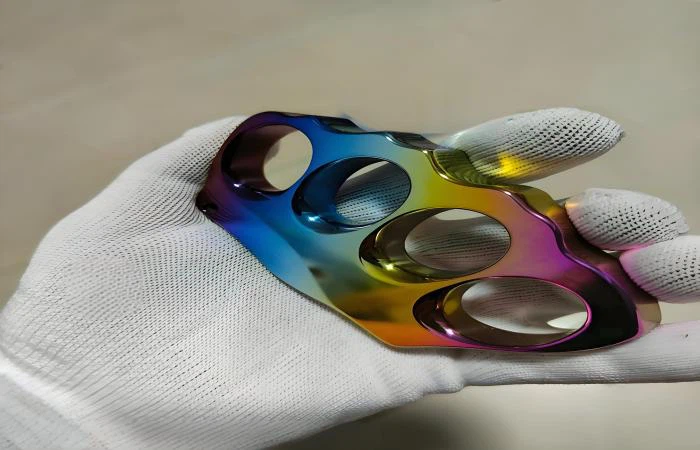
In addition to decorativeness, the anodizing process also forms a dense film layer on the metal surface of the product, enhancing mechanical properties, wear and weather resistance, insulation, and improving the bonding with the coating.
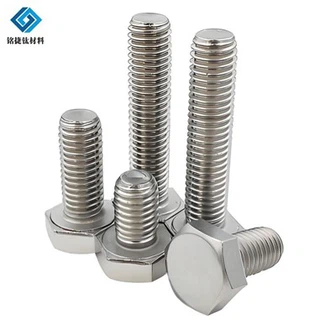
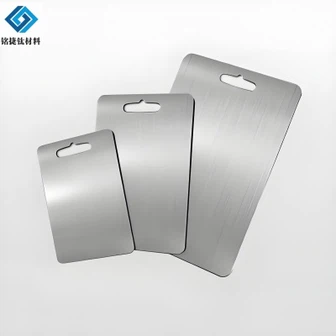
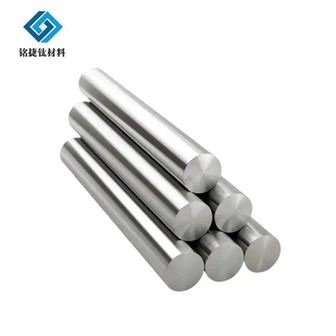
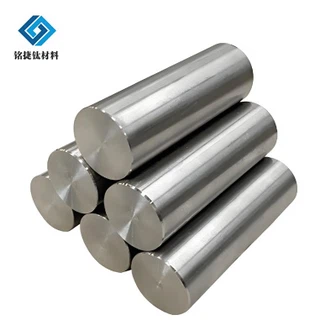
It is worth mentioning here that titanium alloy is different from aluminum alloy, although the cost of titanium as an anode is higher, but the oxide film formed by titanium alloy is worse than itself. Therefore, generally speaking, many manufacturers choose to anode on the surface of pure titanium products, such as several products in the picture, which are anodized effects made of TC4 pure titanium surface.
Taking the iPhone 15 Pro as an example, among the four color schemes: black titanium, white titanium, blue titanium, and natural titanium, except for the original titanium silver color, the other three color schemes are combined with PVD coating technology on the basis of anodizing to increase the surface performance of the product. However, fading and other adverse conditions still occurred subsequently, which also reflects the shortcomings of PVD in durability.
Of course, in addition to functionality, coloring effects can also be achieved. Overall, it can greatly enhance the design level of the product.
2. PVD coating
PVD is also a kind of physical vapor deposition and vacuum coating, and the process has been very mature. It is possible to do PVD on the surface of titanium alloy, mainly to add functional coating to protect and protect. However, it is worth noting that at present, PVD can only be functional to barely pass the test, and the durability needs to be improved, unless the performance of the PVD primer material is very good.
PVD coatings convert materials such as titanium or titanium oxide into a gaseous state through vacuum evaporation, sputtering, or ion-assisted deposition, which are subsequently deposited onto the surface of titanium. This process is carried out in a high-temperature and vacuum environment to create a film with high hardness, high adhesion, and wear resistance by precisely controlling the partial pressure of oxygen and deposition parameters. PVD is a kind of vacuum coating, and the process is very mature. It is possible to do PVD on the surface of titanium alloy, mainly to add functional coating to protect and protect. However, it is worth noting that at present, PVD can only be functional to barely pass the test, and the durability needs to be improved, unless the performance of the PVD primer material is very good.
3. CNC
The process of CNC machining titanium alloy mainly includes key steps such as design, programming, tool selection, parameter setting and machining control:
1. Rough machining: remove excess material, form a preliminary outline, and improve efficiency.
2. Finishing: Final shape machining is achieved using high-precision tools and optimized parameters (such as feed rate and cutting depth) to ensure dimensional accuracy and surface quality.
3. Quality Inspection: Use a coordinate measuring machine (CMM) to check the size and surface roughness, and proceed with subsequent processing if it meets the standards.
During the machining process, constant feed must be maintained to avoid hardening of the workpiece, and cutting fluid must be used reasonably to reduce the blade temperature, flush away chips, and improve surface quality and machining efficiency.
CNC machining of titanium alloys primarily serves shaping and finishing purposes. One of the most significant challenges in this process is tool wear. Because titanium alloys are relatively hard, machining them is more challenging than with other metals. During machining, the tool is subjected to high temperatures, high cutting forces, long friction distances, significant vibration deformation, and tool sticking, all leading to severe tool wear. Traditional tools struggle to machine titanium alloys, requiring specialized composite-coated tools, even diamond and CBN tools, for effective machining. For example, for smartwatch cases, one tool is lost for every four cases produced, resulting in significant costs.

3. Grinding and polishing
Grinding and polishing are essential steps in processing almost every material, aiming to achieve more precise dimensions and a more refined texture. This often requires the use of fine polishing particles or consumables to meticulously polish every surface area. Specific process solutions can also achieve special effects, such as high-gloss mirrors and matte finishes.

4. Wire drawing
The surface of titanium metal can be brushed to create a matte texture. This brushed titanium effect is very common in consumer electronics products. It combines delicate touch and visual beauty, and is recognized and favored by more consumers.

5. Laser Engraving
The main processes include laser drilling and welding.
6. Sandblasting
The primary purpose of sandblasting titanium alloy surfaces is functionality. This includes improving titanium surface adhesion, extending service life (by removing surface impurities), and enhancing surface smoothness and aesthetics. Sandblasting can also be considered a service to other surface treatment processes.
A previous Apple patent mentioned titanium alloy and sandblasting. By combining a new sandblasting process with etching and anodizing, the titanium alloy surface treatment can be achieved. This can eliminate rough edges and retain the finer details, achieving better protection and appearance. It is understood that Apple's latest iPhone 15 Pro titanium frame uses sandblasting.

When it comes to surface treatment of titanium products, especially in the field of precision electronics, a better approach is to combine dissimilar metals and then create the exterior. The drawback is the relatively high cost. This is because dissimilar metals must maintain their respective unique properties and characteristics while also meeting the requirements of large-scale production, resulting in a relatively high price. Apple's latest iPhone 15 Pro features a completely new structural design, encased in a new secondary structure made of 100% recycled aluminum. It utilizes new thermomechanical processing and other processes, achieving a high-strength bond between the two metals through the ultra-high pressure of solid-state diffusion. However, the actual results are still unsatisfactory, and titanium surface treatment technology needs to be further improved.