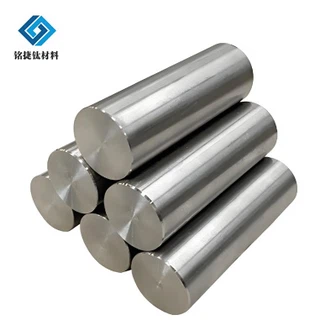
Comprehensive analysis of industrial pure titanium and titanium alloys
"Titanium" is known as the "space metal", but do you really understand its industrial classification? From aerospace to medical devices, how do different titanium alloys perform their respective functions? Here, we will explore the mysteries of titanium alloys and see how they perform their respective functions in aerospace, medical, shipbuilding, chemical and other fields.
1. Functions and characteristics of pure titanium Ta1, Ta2, Ta3.
TA1: Gentle and malleable "freshman"
Features: Excellent plasticity, but average strength.
Career orientation: Medical devices (e.g. dental implants, orthopedic implants).
Inner thoughts: "Although I can't handle great pressure, I am super friendly to the human body and will never cause rejection!"

Why does medical care prefer TA1?
A: Because it has excellent biocompatibility and does not cause allergic reactions like some metals (such as nickel). So, if your dentist recommends titanium crowns, TA1 is likely to be your "new tooth"
TA2: A steady and cautious "workplace veteran"
Features: Balanced strength and plasticity, high cost performance.
Career orientation: Chemical equipment, seawater desalination equipment.
Classic case: Heat exchangers in desalination plants, TA2 can easily resist corrosion from seawater and is more durable than stainless steel.
TA3: The "technical backbone" with full strength
Features: high strength, but reduced plasticity.
Career positioning: pressure vessels, chemical pipelines.
Complaint: "My boss always thinks I'm not smooth enough, but at critical moments, I still have to bear the high pressure!"

summary
TA1 (best biocompatibility) is the first choice for medical use.
For chemical industry and shipbuilding, choose TA2 (corrosion resistant + cost-effective).
For high pressure environment, choose TA3 (highest strength, but slightly worse plasticity).
2. Among the four major titanium alloy schools, which one is the real "hexagonal warrior"?
If pure titanium is the "basic version", then titanium alloy is the "advanced version". According to the ratio of different elements, it can be divided into four major types: α-type, β-type, α+β-type, and new titanium alloy.
1. α-type titanium alloy (such as TA7): high temperature resistant "yoga master"
"As the preferred material for spacecraft shells and missile fuel tanks, α-type titanium alloy has excellent high temperature resistance of 500°C and is easy to weld, but cold processing is a bit difficult. We confidently declare: 'High temperature? No problem!'"
Why do spacecraft prefer TA7?
Because when rockets and missiles fly at high speeds, the outer shell will generate high temperatures due to air friction, and TA7 can remain stable at high temperatures and will not easily deform or crack.
2. β-type titanium alloy (such as TB2): high-strength "fitness maniac"
β-titanium alloy is an ideal choice for high-end applications due to its ultra-high strength and excellent heat treatment strengthening performance. Although it is expensive, it is the "top-of-the-line" choice for aviation fasteners (such as aircraft rivets) and high-performance sports equipment (such as golf clubs and bicycle frames). As it confidently declares: "Although I am expensive, without me, the screws of airplanes cannot be tightened!" - Behind this arrogance is irreplaceable excellent performance.
Why is TB2 so expensive?
Because it contains expensive alloy elements such as molybdenum, chromium, and vanadium, and is difficult to process, it is a "luxury product" among titanium alloys.
3. α+β titanium alloy (such as TC4): all-round "hexagonal warrior"
As the absolute mainstay of titanium for industrial use (accounting for 80%), α+β titanium alloy shines in high-end fields with its perfect balance of strength, plasticity and corrosion resistance: in the aviation industry, it is the skeleton of the Boeing 787 fuselage frame; in the medical field, it is the "top-stream" material for artificial hip joints; under the deep sea, it is the pressure-resistant armor of the "Jiaolong" manned submersible. From the 10,000-meter deep sea to the top of the blue sky, this all-round performance makes it a quality choice for key components such as aircraft landing gear and artificial joints.

Why is TC4 so popular?
Because of its unbeatable comprehensive performance, it can not only withstand high loads, but also be corrosion-resistant and can get along well with the human body. It can be called the "panacea" in the titanium alloy world.
4. New titanium alloy (Ti-Al-V-Zr): "black technology" for engine blades
The new titanium alloy, with its excellent creep resistance and fatigue resistance, remains as stable as a mountain under high temperature and high pressure, and is known as the "endurance king" of aviation materials. It is showing its prowess in the fields of aviation engine blades and supersonic aircraft, becoming the "steel guard" that protects flight safety. Industry experts are more optimistic about it becoming the "core role" of the next generation of fighter jets - the ruler of the future sky may be hidden in the genes of this alloy!