

What are the heat - treatment processes for titanium plates?
Titanium plates are highly sought - after in various industries due to their excellent properties such as high strength - to - weight ratio, corrosion resistance, and biocompatibility. As a titanium plate supplier, I am well - versed in the heat - treatment processes that can significantly enhance the performance of these plates. In this blog, I will delve into the different heat - treatment processes for titanium plates, explaining their purposes, procedures, and the effects they have on the material.
Annealing
Annealing is one of the most common heat - treatment processes for titanium plates. The main purpose of annealing is to relieve internal stresses, improve ductility, and refine the grain structure of the titanium. There are different types of annealing processes, including full annealing, partial annealing, and stress - relief annealing.
Full annealing involves heating the titanium plate to a temperature above the beta - transus temperature (the temperature at which the titanium changes from the alpha phase to the beta phase), holding it at that temperature for a certain period, and then slowly cooling it. This process results in a coarse - grained structure, which is beneficial for improving the ductility of the titanium plate. For example, in applications where the plate needs to be formed or machined extensively, a fully annealed titanium plate is preferred.
Partial annealing is carried out at a temperature below the beta - transus temperature. It is used to achieve a balance between strength and ductility. By heating the plate to a specific temperature and then cooling it, some of the internal stresses are relieved, and the microstructure is modified to improve the mechanical properties.
Stress - relief annealing is mainly focused on reducing internal stresses that are generated during manufacturing processes such as cold working or welding. The plate is heated to a relatively low temperature, held for a sufficient time to allow the stresses to relax, and then cooled slowly. This process helps to prevent distortion and cracking of the titanium plate during subsequent use.
Solution Treatment and Aging
Solution treatment and aging are often used together to enhance the strength of titanium plates. Solution treatment involves heating the plate to a high temperature within the beta - phase region and holding it there for a period to dissolve any precipitates in the material. After that, the plate is rapidly quenched to room temperature to retain the supersaturated solid solution.
The subsequent aging process is carried out at a lower temperature. During aging, the supersaturated solid solution decomposes, and fine precipitates form within the matrix. These precipitates act as obstacles to dislocation movement, thereby increasing the strength of the titanium plate. This heat - treatment process is particularly useful in applications where high strength is required, such as in aerospace components. For instance, Hot Rolling Titanium Plate can benefit from solution treatment and aging to meet the strict strength requirements of aerospace structures.
Beta Annealing
Beta annealing is a specialized heat - treatment process for titanium plates. It involves heating the plate above the beta - transus temperature and then cooling it at a controlled rate. This process results in a predominantly beta - phase microstructure. Beta - annealed titanium plates have excellent high - temperature properties, such as good creep resistance. They are often used in applications where the plate will be exposed to high temperatures for extended periods, such as in some chemical processing equipment.
Effects of Heat Treatment on Titanium Plate Properties
The heat - treatment processes have a profound impact on the properties of titanium plates. In terms of mechanical properties, annealing can improve ductility, while solution treatment and aging can increase strength. For example, a ASTM B265 Titanium Plate that undergoes proper heat treatment can have its yield strength and ultimate tensile strength significantly enhanced, making it suitable for more demanding applications.
The corrosion resistance of titanium plates can also be affected by heat treatment. Some heat - treatment processes can modify the surface oxide layer of the titanium, which plays a crucial role in its corrosion resistance. A well - heat - treated titanium plate can have a more stable and protective oxide layer, thereby improving its resistance to various corrosive environments.
The microstructure of the titanium plate is directly related to its heat - treatment history. Different heat - treatment processes result in different grain sizes, phase compositions, and precipitate distributions. These microstructural features determine the overall performance of the plate, including its fatigue resistance, toughness, and formability.
Considerations in Heat Treatment
When performing heat treatment on titanium plates, several factors need to be considered. First, the chemical composition of the titanium alloy is crucial. Different alloying elements can have different effects on the heat - treatment response of the plate. For example, alloys with higher levels of certain elements may require different heat - treatment parameters to achieve the desired properties.
The heating and cooling rates are also important. Rapid heating or cooling can cause thermal stresses in the plate, which may lead to cracking or distortion. Therefore, precise control of the heating and cooling rates is necessary to ensure the quality of the heat - treated titanium plate.
The duration of the heat - treatment process is another critical factor. Holding the plate at a specific temperature for an appropriate time is essential for achieving the desired microstructural changes. If the holding time is too short, the heat - treatment may not be effective, while an excessively long holding time can lead to grain growth and other undesirable effects.
Applications of Heat - Treated Titanium Plates
Heat - treated titanium plates find wide applications in various industries. In the aerospace industry, they are used for aircraft structural components, engine parts, and landing gear. The high strength - to - weight ratio and excellent corrosion resistance of heat - treated titanium plates make them ideal for these applications. For example, a Gr2 Ti Titanium Plate And Sheet that has been heat - treated properly can withstand the harsh conditions of flight, including high temperatures and corrosive environments.
In the medical field, heat - treated titanium plates are used for implants such as bone plates and dental implants. The biocompatibility of titanium, combined with the improved mechanical properties achieved through heat treatment, makes it a popular choice for these applications.
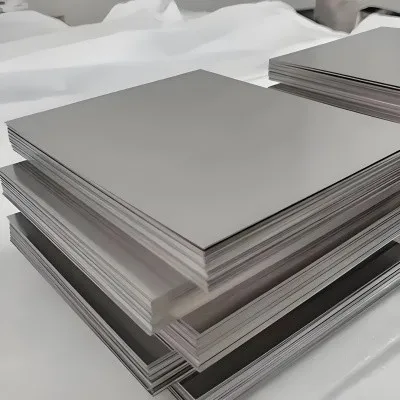

The chemical processing industry also relies on heat - treated titanium plates. They are used in equipment such as reactors, heat exchangers, and piping systems. The corrosion resistance of heat - treated titanium plates ensures the long - term reliability of these components in corrosive chemical environments.
Conclusion
As a titanium plate supplier, I understand the importance of heat - treatment processes in optimizing the performance of titanium plates. Annealing, solution treatment and aging, beta annealing, and other heat - treatment methods offer different ways to enhance the mechanical properties, corrosion resistance, and other characteristics of the plates. By carefully selecting the appropriate heat - treatment process based on the specific requirements of the application, we can provide high - quality titanium plates that meet the needs of our customers.
If you are interested in purchasing heat - treated titanium plates or have any questions about our products, please feel free to contact us for a detailed discussion. We are committed to providing you with the best solutions for your titanium plate needs.
References
- "Titanium: A Technical Guide" by John R. Gilbert.
- "Heat Treatment of Titanium Alloys" by various authors in the Journal of Materials Science and Technology.