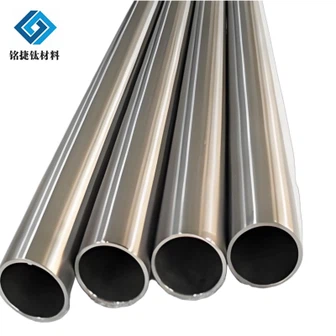
Titanium alloy The “hard-core material” in the medical field, how to reshape the future
With the excellent biocompatibility, high strength, low modulus and corrosion resistance, titanium alloy is setting off a "hard-core revolution" in the medical field. It not only replaces traditional medical metal materials, but also promotes the evolution of implantable devices in the direction of intelligence and functionalization through the integration withadvanced manufacturing, bioengineering and other technologies, and reconstructs the paradigm of improving the quality of human life.

Current Situation: The "Golden Age" of Titanium Alloy Medical Applications
1. Market Size: Billion-Dollar Segment, Continuously Expanding
In 2024, the Chinese medical titanium alloy market size has exceeded 10 billion yuan, with an annual compound growth rate maintained at over 15%. Orthopedic implants (such as artificial joints and spinal correctors) account for the largest market share (over 50%), followed by cardiovascular stents and dental implants.
Core driving forces: Accelerated aging population (over 300 million people aged 60 and above in China), advances in medical technology, and policy support. It is expected that the market size will reach 20 billion yuan by 2025 and may exceed 30 billion yuan by 2030.
2. Orthopedic implantation: from mechanical support to biological regeneration.
Application field: from "orthopedic overlord" to multi-domain penetration
Orthopedics: There is strong demand for artificial joints, bone plates, etc., and domestic substitution has accelerated (the market share of domestic products exceeds 60%).
Cardiovascular: Titanium alloy stents have become mainstream due to their biocompatibility and corrosion resistance, and degradable titanium alloy stents have become a hot topic in research and development.
Dentistry: Implants and orthodontic materials are growing rapidly, and the high-end market is still dependent on imports.
Emerging fields: 3D printing titanium alloy skull restorations and neurosurgical instruments have gradually entered clinical practice.
3. Technological Progress: Breakthrough in Domestic Production and Process Upgrade.
Material Research and Development: Domestic enterprises have broken through the technology of high-purity titanium alloys and low elastic modulus titanium alloys, and some products have reached international levels in performance.
Manufacturing process: precision casting and 3D printing (such as SLM technology) improve the production efficiency of complex structural parts and reduce costs by more than 30%.
Surface treatment: nano-coating and biologically active modification technology extend the life of the implant and reduce the rejection reaction.

4. Policy support: domestic substitution and innovation drive
The state has issued the "Regulations on the Supervision and Administration of Medical Devices" and the "14th Five-Year Plan for the Development of Medical Equipment" to clearly support the research and development of high-end titanium alloy equipment, and set up special funds to promote domestic substitution. In 2024, 65 innovative medical devices will be approved, 71% of which will be domestically produced.
Frontiers of Future Technology
1. In vivo metal-cell hybrid systems.
Gene editing interface materials
CRISPR-Ti vector developed by MIT, carrying CRISPR-Cas9 plasmid through nanopores on titanium oxide surface, can edit VEGF gene expression of surrounding cells and promote angiogenesis rate by 3 times.
2.Self-perceiving intelligent implant.
Stress-strain-electrical signal conversion system
Harvard University-developed titanium-based MXene strain sensor implant, capable of real-time monitoring of bone healing progress (accuracy up to 0.1% strain), with data transmitted to the mobile APP via Bluetooth to achieve personalized rehabilitation management.
Challenges and solutions: how to bridge the technology gap?
1.Challenges and breakthrough paths
Surface functionalization technology . Plasma electrolytic oxidation (PEO) technology increases the deposition efficiency of hydroxyapatite on titanium alloy surface by 80%
Low-cost manufacturing : Selective laser melting (SLM) 3D printing costs have been reduced from $500/cm³ to $50/cm³ (2015-2023)
2. industry risk.
Iteration risk: new materials (such as high-strength aluminum) may replace titanium alloys, and continuous research and development is needed to maintain advantages.
Environmental protection pressure: titanium smelting energy consumption is high, green production technology (such as electrolysis) needs to be broken through.
3. coping strategy
Industry-university-research collaboration: universities and enterprises jointly build laboratories to tackle core patents (such as degradable titanium alloy formula).
Industrial chain integration: upstream extension to sponge titanium production, downstream joint hospital to carry out clinical verification.
Conclusion: The future of titanium alloy medical treatment has come
From "follow" to "run together," China titanium alloy medical industry is standing on the eve of the outbreak. With the maturity of technologies such as 3D printing and degradable materials, titanium alloys will promote the therapeutic revolution in the fields of orthopedics and cardiovascular diseases. Titanium alloys are making the paradigm transition from "alternative therapy" to "functional enhancement" in the medical field. With the deep penetration of bioelectronics, nanotechnology and artificial intelligence, future titanium-based medical devices will have diagnostic, therapeutic and regenerative functions, and finally realize the "integration of inorganic life" between human and medical technology. This process will not only prolong human life, but will redefine the boundaries of "health."