

What is the density of Gr1 Titanium Foil?
Hey there! If you're here, you're probably as curious about Gr1 titanium foil as I am. As a supplier of this super - useful material, I get a ton of questions, and one that pops up quite often is about its density. So, let's dig right in!
Understanding Gr1 Titanium Foil
First off, what exactly is Gr1 titanium foil? Well, titanium is an amazing metal. It's strong, lightweight, and super resistant to corrosion. Grade 1 titanium is the purest form of commercially - pure titanium. When it's made into a foil, it becomes this super - thin, versatile material that has all sorts of applications.
You can find Gr1 titanium foil in aerospace, where weight and durability are crucial. It's also used in the medical industry for things like surgical implants because of its biocompatibility. And in electronics, it can be used for shielding and other components.
The Density of Gr1 Titanium Foil
Now, let's talk about density. Density is basically how much mass is packed into a certain volume. For Gr1 titanium foil, the density is approximately 4.51 g/cm³. This value is pretty consistent across different samples of Gr1 titanium, whether it's in foil form or not.
Why is this density important? Well, if you're designing a product, knowing the density helps you calculate the weight of the titanium foil you'll need. For example, if you're building a lightweight aerospace component, you can figure out how much the Gr1 titanium foil will add to the overall weight of the part.

Let's say you have a sheet of Gr1 titanium foil with a volume of 10 cm³. Using the density formula (density = mass/volume), you can calculate the mass. Rearranging the formula gives you mass = density x volume. So, with a density of 4.51 g/cm³ and a volume of 10 cm³, the mass of the foil would be 4.51 g/cm³ x 10 cm³ = 45.1 grams.
Comparing with Other Titanium Grades
It's interesting to compare the density of Gr1 titanium foil with other grades. For instance, High purity titanium Gr2 foil has a very similar density. Grade 2 titanium is also commercially pure, but it has a bit more oxygen and iron in it compared to Grade 1. However, this doesn't change the density significantly. The density of Gr2 titanium is also around 4.51 g/cm³.
This similarity in density between Gr1 and Gr2 is great news for manufacturers. It means that they can often switch between the two grades without having to completely re - design their products in terms of weight.
Our Gr1 Titanium Foil Offerings
As a supplier, I'm really proud of the Gr1 high purity Titanium Foil we offer. We make sure that our foil meets the highest standards of purity and quality. Our manufacturing process is top - notch, and we use the latest technology to ensure that the foil has a consistent thickness and density.
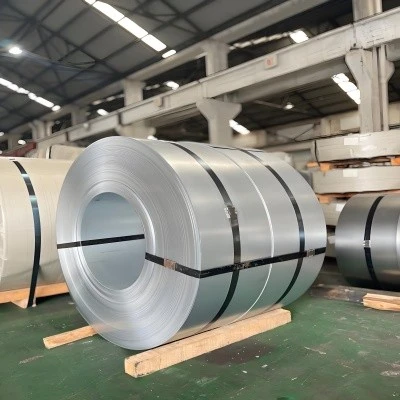
We also offer Titanium Gr1 Coil, which is great for continuous production processes. The coil form allows for easy handling and integration into automated manufacturing systems.
Factors Affecting Density
While the density of Gr1 titanium foil is generally around 4.51 g/cm³, there are a few factors that can cause slight variations. One factor is the manufacturing process. If the foil is rolled too tightly or too loosely, it can affect the internal structure of the titanium, which in turn can have a small impact on density.
Another factor is impurities. Even though Gr1 is a high - purity grade, there can still be trace amounts of other elements. These impurities can change the density slightly. However, in our products, we keep a close eye on the purity levels to minimize any density variations.
Applications and Density Considerations
In different applications, the density of Gr1 titanium foil plays a crucial role. In the aerospace industry, as I mentioned earlier, weight is a major concern. Every gram counts, so knowing the exact density helps engineers design more efficient aircraft.
In the medical field, the density of the titanium foil can affect how it interacts with the human body. A lighter foil might be more comfortable for a patient if it's used in an implant, for example. And in electronics, the density can impact the performance of shielding components.
Quality Control and Density
At our company, we have a strict quality control process in place to ensure that the density of our Gr1 titanium foil is consistent. We use advanced measuring equipment to check the density of each batch of foil. This way, our customers can be confident that they're getting a product with the expected density.
We also provide detailed documentation with each order, including information about the density and other properties of the foil. This helps our customers make informed decisions when using our products in their projects.
Why Choose Our Gr1 Titanium Foil?
There are a few reasons why you should choose our Gr1 titanium foil. First, as I've said, we have great quality control. You can trust that the density and other properties of the foil will be as advertised.
Second, we offer competitive prices. We understand that cost is an important factor for our customers, so we work hard to keep our prices reasonable without sacrificing quality.
Third, our customer service is top - notch. If you have any questions about the density or other aspects of our Gr1 titanium foil, our team is always ready to help.
Contact Us for Your Gr1 Titanium Foil Needs
If you're in the market for high - quality Gr1 titanium foil, we'd love to hear from you. Whether you need a small sample to test or a large order for a big project, we can handle it. Just reach out to us, and we'll start discussing your requirements. We're here to make sure you get the best Gr1 titanium foil for your specific needs.
References
- "Titanium: A Technical Guide", ASM International
- Various industry reports on titanium materials and applications