

What are the effects of temperature on the mechanical properties of titanium plates?
Hey there! As a titanium plate supplier, I've been dealing with all sorts of titanium products for ages. One question that often pops up is, "What are the effects of temperature on the mechanical properties of titanium plates?" Well, let's dig into this topic and find out.
First off, let's understand a bit about titanium plates. We offer different grades of titanium plates, like Gr2 Ti Titanium Plate And Sheet, Gr1 Titanium Plate And Sheet, and Gr5 Titanium Plate. Each grade has its own unique properties, but they all share some common characteristics when it comes to how temperature affects them.
Low - Temperature Effects
At low temperatures, titanium plates show some interesting changes in their mechanical properties. One of the most significant effects is an increase in strength. When the temperature drops, the atoms in the titanium lattice move less freely. This restricted movement makes it harder for dislocations (defects in the crystal structure) to move, which in turn increases the material's resistance to deformation.
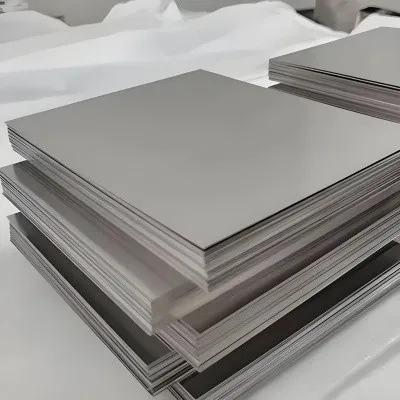

For example, in some applications where titanium plates are used in extremely cold environments, like in cryogenic storage tanks, the increased strength at low temperatures is a huge advantage. The plates can withstand the internal pressure of the stored substances without deforming. However, there's a downside too. The ductility of titanium plates decreases at low temperatures. Ductility is the ability of a material to deform plastically before fracturing. When the ductility goes down, the titanium becomes more brittle. So, there's a higher risk of sudden and catastrophic failure if the plate is subjected to a shock load or a high - stress situation.
Room - Temperature Properties
At room temperature, titanium plates have a good balance of strength and ductility. They are relatively easy to machine and form into different shapes. The mechanical properties at room temperature are what most designers and engineers base their initial calculations on. For instance, when fabricating a titanium structure for a building or a piece of machinery, the room - temperature properties determine how thick the plates need to be and how they should be joined together.
The yield strength, which is the stress at which the material starts to deform permanently, and the ultimate tensile strength, which is the maximum stress the material can withstand before breaking, are well - defined at room temperature. The elongation at break, a measure of ductility, is also within a reasonable range. This makes titanium plates suitable for a wide variety of applications, from aerospace components to medical implants.
High - Temperature Effects
Now, let's talk about high temperatures. As the temperature rises, the mechanical properties of titanium plates change significantly. The first thing that happens is a decrease in strength. At high temperatures, the atoms in the titanium lattice gain more energy and start to move more freely. This increased atomic mobility allows dislocations to move more easily, reducing the material's resistance to deformation.
For example, in applications like jet engine components, where titanium plates are exposed to extremely high temperatures, the loss of strength is a major concern. Engineers have to design the components in such a way that they can still function properly even with the reduced strength. They might use thicker plates or add reinforcement structures to compensate for the loss.
Another important effect at high temperatures is oxidation. Titanium has a high affinity for oxygen, and at elevated temperatures, it forms a layer of titanium oxide on its surface. This oxide layer can protect the underlying titanium to some extent, but if the temperature is too high or the exposure time is long, the oxidation can penetrate deeper into the material. Oxidation can also cause a change in the surface properties of the plate, which might affect its performance in certain applications.
Impact on Different Grades of Titanium Plates
Different grades of titanium plates respond differently to temperature changes. Take Gr1 Titanium Plate And Sheet for example. It is a commercially pure titanium grade. It has relatively low strength compared to some of the alloyed grades, but it has excellent corrosion resistance. At high temperatures, the strength loss in Gr1 titanium is more gradual compared to some of the high - strength alloy grades.
On the other hand, Gr5 Titanium Plate, which is an alloy of titanium with aluminum and vanadium, is known for its high strength. However, at high temperatures, the alloying elements can react with oxygen and other elements in the environment, which can further degrade the mechanical properties. The strength of Gr5 titanium drops more rapidly at high temperatures compared to Gr1, but it still retains a higher absolute strength at elevated temperatures due to its initial high - strength nature.
Applications and Temperature Considerations
The effects of temperature on the mechanical properties of titanium plates have a direct impact on their applications. In the aerospace industry, where components are exposed to a wide range of temperatures during flight, from the cold of high - altitude flight to the heat generated by air friction, the choice of titanium grade and the design of the components are crucial. Engineers need to carefully consider how the temperature will affect the strength, ductility, and oxidation resistance of the plates.
In the chemical processing industry, titanium plates are often used because of their excellent corrosion resistance. But the operating temperatures in chemical plants can vary widely. If the temperature is too high, the loss of strength and the potential for oxidation can lead to premature failure of the equipment. So, the selection of the appropriate titanium grade and the implementation of temperature - control measures are essential.
Importance of Understanding Temperature Effects for Suppliers
As a titanium plate supplier, understanding the effects of temperature on the mechanical properties is vital. It helps us provide the right advice to our customers. When a customer comes to us with a specific application in mind, we can recommend the most suitable grade of titanium based on the temperature conditions the plates will be exposed to.
For example, if a customer is looking for a titanium plate for a high - temperature application, we can steer them towards a grade that has better high - temperature stability, like Gr5 Titanium Plate. We can also provide information on how to handle and maintain the plates to ensure their long - term performance.
Contact for Procurement
If you're in the market for titanium plates and have questions about how temperature might affect your specific application, don't hesitate to reach out. We're here to help you make the right choice and ensure that you get the best - quality titanium plates for your needs. Whether it's Gr2 Ti Titanium Plate And Sheet, Gr1 Titanium Plate And Sheet, or Gr5 Titanium Plate, we've got you covered. Let's start a conversation and find the perfect solution for your project.
References
- Callister, W. D., & Rethwisch, D. G. (2016). Materials Science and Engineering: An Introduction. Wiley.
- Boyer, R. R., Welsch, G., & Collings, E. W. (1994). Materials Properties Handbook: Titanium Alloys. ASM International.