

How do titanium plates compare with aluminum plates in terms of strength?
Hey there! As a titanium plate supplier, I often get asked how titanium plates stack up against aluminum plates when it comes to strength. It's a pretty common question, and for good reason. Both materials have their own unique properties and uses, so it's important to understand the differences before making a decision. In this blog post, I'll break down the key factors that determine the strength of titanium and aluminum plates and help you figure out which one is the right choice for your project.
Understanding Strength
Before we dive into the comparison, let's quickly go over what we mean by "strength." In the context of materials, strength refers to the ability of a material to withstand an applied load without breaking or deforming. There are several different types of strength, including tensile strength, compressive strength, and shear strength. Tensile strength is the maximum amount of stress a material can withstand when being pulled apart, while compressive strength is the maximum amount of stress a material can withstand when being squeezed together. Shear strength is the maximum amount of stress a material can withstand when being cut or sliced.
Tensile Strength
One of the most important factors to consider when comparing the strength of titanium and aluminum plates is their tensile strength. Titanium is known for its exceptional tensile strength, which is significantly higher than that of aluminum. In fact, titanium has a tensile strength that is about twice that of aluminum. This means that titanium plates can withstand much higher levels of stress before breaking or deforming.
The high tensile strength of titanium makes it an ideal choice for applications where strength and durability are critical, such as aerospace, automotive, and medical industries. For example, titanium plates are commonly used in aircraft frames, engine components, and surgical implants because they can withstand the extreme forces and stresses encountered in these applications.
If you're interested in learning more about titanium plates, you can check out our Titanium Metal Plate page for more information.
Compressive Strength
In addition to its high tensile strength, titanium also has excellent compressive strength. Compressive strength is the ability of a material to withstand a crushing force without breaking or deforming. Titanium's high compressive strength makes it a great choice for applications where the material will be subjected to heavy loads or pressure, such as in construction and manufacturing.
Aluminum, on the other hand, has a lower compressive strength compared to titanium. While aluminum is still a strong and durable material, it may not be the best choice for applications where high compressive strength is required.
Shear Strength
Shear strength is another important factor to consider when comparing the strength of titanium and aluminum plates. Shear strength is the ability of a material to resist forces that cause it to slide or shear along a plane. Titanium has a higher shear strength than aluminum, which means it can better withstand forces that would cause the material to deform or break along a plane.
The high shear strength of titanium makes it a popular choice for applications where the material will be subjected to shear forces, such as in cutting tools, fasteners, and structural components. For example, titanium plates are commonly used in cutting tools because they can withstand the high shear forces generated during the cutting process.
If you're looking for a high-quality titanium plate with excellent shear strength, you might be interested in our Gr2 Ti Titanium Plate And Sheet.
Density and Weight
While titanium has superior strength compared to aluminum, it's important to note that titanium is also significantly denser and heavier than aluminum. This means that titanium plates will weigh more than aluminum plates of the same size and thickness. In applications where weight is a critical factor, such as in aerospace and automotive industries, aluminum may be a better choice.
However, it's important to consider the overall strength-to-weight ratio when making a decision. While titanium is heavier than aluminum, its high strength means that you can use thinner and lighter titanium plates to achieve the same level of strength as thicker and heavier aluminum plates. This can result in a significant weight savings in certain applications.
Corrosion Resistance
Another important factor to consider when comparing titanium and aluminum plates is their corrosion resistance. Titanium is highly resistant to corrosion, even in harsh environments such as saltwater and acidic solutions. This makes it an ideal choice for applications where the material will be exposed to corrosive substances, such as in marine and chemical industries.
Aluminum, on the other hand, is also corrosion-resistant, but it is not as resistant as titanium. Aluminum can form a thin oxide layer on its surface that protects it from corrosion, but this layer can be damaged or removed in certain environments, leaving the aluminum vulnerable to corrosion.

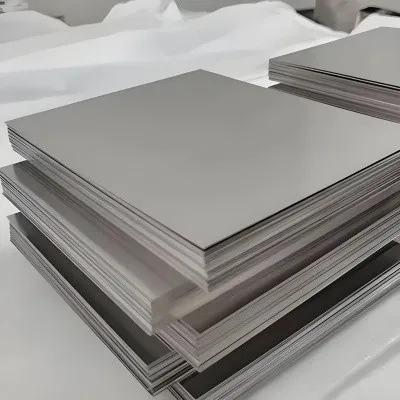
If you're looking for a titanium plate that offers excellent corrosion resistance, you might be interested in our Titanium Surgical Plate, which is specifically designed for medical applications where corrosion resistance is critical.
Cost
Finally, it's important to consider the cost when comparing the strength of titanium and aluminum plates. Titanium is generally more expensive than aluminum due to its higher production costs and limited availability. However, the high strength and durability of titanium can often offset the higher cost in applications where strength and performance are critical.
Aluminum, on the other hand, is more affordable and widely available, making it a popular choice for applications where cost is a major factor. If you're working on a budget, aluminum may be a better option for you.
Conclusion
In conclusion, titanium plates offer superior strength compared to aluminum plates in terms of tensile strength, compressive strength, and shear strength. Titanium's high strength and durability make it an ideal choice for applications where strength and performance are critical, such as in aerospace, automotive, and medical industries. However, titanium is also denser and heavier than aluminum, and it is generally more expensive.
Aluminum, on the other hand, is a lighter and more affordable alternative to titanium. While aluminum has lower strength compared to titanium, it is still a strong and durable material that is suitable for many applications.
Ultimately, the choice between titanium and aluminum plates depends on your specific needs and requirements. If you need a material with exceptional strength and durability, titanium may be the right choice for you. If you're working on a budget or need a lighter material, aluminum may be a better option.
If you have any questions or would like to discuss your specific requirements, please don't hesitate to contact us. We're here to help you find the right titanium or aluminum plates for your project.
References
- "Titanium: Properties, Processing, and Applications." ASM International, 2000.
- "Aluminum: Properties and Physical Metallurgy." ASM International, 1993.
- "Materials Science and Engineering: An Introduction." William D. Callister Jr., John Wiley & Sons, 2010.