How Expensive Is Titanium?
Did you know that the price of titanium alloy + is 200 yuan per kilogram, while the price of military titanium alloy is between 500-1000 yuan. So, what exactly is titanium? Why is it so expensive after alloying?
First, let's understand the origins of titanium. Titanium, a silvery-white metal primarily derived from ilmenite, rutile, and perovskite, is a highly reactive metal. However, due to its high smelting requirements, it has long been difficult to produce in large quantities, earning it the status of a "rare" metal.
In fact, humans discovered titanium in 1791, but it took over a century for pure titanium to be produced until 1910. The main reason is that titanium is very active at high temperatures and easily combines with elements such as oxygen, nitrogen, and carbon. Refining pure titanium requires very harsh conditions. However, China's titanium production has grown from 200 tons in the last century to 150,000 tons today, currently ranking first in the world. So, where is titanium, which is so expensive, mainly used?
1. Titanium handicrafts. Titanium has a high density and is corrosion-resistant, especially oxidizable and color-changing. It has excellent decorative effects and is much cheaper than real gold. Therefore, it is used instead of real gold for craft ceramics, antique buildings and ancient building repairs, outdoor nameplates and plaques, etc.
2. Titanium jewelry. Titanium has actually quietly entered our lives. Nowadays, some girls wear jewelry made of pure titanium. The biggest feature of this new type of jewelry is health, safety and environmental protection. It will not produce harmful substances to human skin and body. It is called "green jewelry".

3. Titanium glasses. Titanium resists deformation more than steel, yet weighs only half as much. While seemingly identical to standard metal glasses, titanium glasses are lightweight and comfortable, with a smooth, warm touch, unlike the cold, icy feel of other metal glasses. Titanium frames are significantly lighter than standard metal frames, retain their shape even after long-term use, and offer a higher level of quality assurance.

4. Aerospace: Much of the steel used in modern aircraft carriers, rockets, and missiles has been replaced with titanium alloys. Cutting experiments have been conducted using both steel and titanium alloys, driven by their resistance to deformation and light weight. During the cutting process, it was discovered that the sparks produced by titanium seemed slightly different: steel was golden, while titanium alloys produced white sparks. This is primarily due to the small particles produced by the titanium alloy during cutting. These particles can spontaneously ignite in air, producing bright sparks, and these sparks are much hotter than those from steel. Consequently, titanium powder is also used as rocket fuel.

According to statistics, over 1,000 tons of titanium are used in navigation worldwide each year. Besides being used as a space material, titanium is also used in submarines. A titanium alloy was once sunk to the bottom of the ocean and retrieved five years later to find it completely rust-free. This is because titanium has a density of only 4.5 grams, yet its strength per cubic centimeter is the highest of all metals, capable of withstanding 2,500 atmospheres of pressure. Therefore, titanium submarines can navigate ocean depths of up to 4,500 meters, while conventional steel submarines can only dive to a maximum of 300 meters.
Titanium has a wide range of applications, and titanium alloys are widely used in medicine, including dentistry, plastic surgery, heart valves, and medical devices. However, the prices of titanium products on the market are generally high, which makes many consumers reluctant to buy them. So, what exactly causes this situation?
1.The mining and utilization of titanium resources is extremely difficult. my country's ilmenite sand deposits are scattered, and titanium resources are relatively concentrated. After years of mining and utilization, high-quality, large-scale resources have been mined. However, since development is primarily based on private mining, large-scale development and utilization are difficult to achieve.
2.there is a strong demand for titanium. As a new metal material, titanium has been widely used in aerospace, construction, marine, nuclear energy, and power generation. As my country's comprehensive national strength continues to rise, titanium consumption is also showing a rapid growth trend.
3. Insufficient titanium production capacity. Currently, only a few industrialized countries in the world are capable of producing titanium.
4. Titanium is difficult to process.

1. From titanium sponge to titanium ingots and then to titanium plates, dozens of processes are required. The titanium smelting process is different from that of steel, requiring controlled melting rate, voltage, and current, as well as ensuring the stability of the composition. Due to the numerous and complex processes, processing is also relatively difficult.
2. Pure titanium is soft and generally unsuitable for use as titanium products. Therefore, other elements must be added to improve the metal's properties. For example, titanium-64, commonly used in the aviation industry, requires the addition of a large number of other elements to improve its metallic properties.
3. Titanium reacts strongly with halogens, oxygen, sulfur, carbon, ammonia and other elements at high temperatures. Therefore, titanium smelting needs to be carried out under vacuum or inert atmosphere to avoid contamination.
4. Titanium is an active metal, but its thermal conductivity is poor, which makes it difficult to weld with other materials.
In summary, there are many factors that affect the price of titanium alloys, including cultural value, demand, production difficulty, etc. However, with the continuous development of science and technology, the production difficulty may gradually decrease in the future.
Of course, why titanium metal is so expensive can be understood by looking at its smelting and processing process!
In the field of materials, titanium alloy is a very excellent metal. Its density is only 60% of steel, but it has excellent strength, toughness and ductility. Therefore, it is widely used in high-end industries, such as aircraft shells, supercar parts, and even the iPhone15 pro max uses a titanium frame.
However, the price of titanium alloy is also very expensive. For example, a titanium screw on Bugatti Veyron costs an astonishing $50. So why is titanium alloy so expensive? How is it processed and formed?

In reality, titanium itself isn't expensive; it's the processing that makes it expensive. The titanium smelting process can be divided into two parts: the preparation of titanium sponge and the smelting of titanium ingots. Titanium sponge, a porous, sponge-like gray substance, is an intermediate product of titanium and the raw material for titanium ingots. Titanium ingots, dense, cylindrical blocks of metal, are the final product and the foundation of titanium materials.
The preparation of sponge titanium mainly involves two methods: the magnesium reduction method and the sodium reduction method. Both methods utilize metallic magnesium or metallic sodium to reduce titanium tetrachloride, yielding sponge titanium. Titanium tetrachloride is a highly corrosive chemical substance, extracted from ilmenite or titanium slag.
Ilmenite and titanium slag are minerals or industrial waste materials containing titanium, with relatively low titanium content, requiring complex chemical treatments to enrich the titanium component. These chemical treatment processes generate various pollutants, and the reduction process must be carried out under high temperature and an inert gas atmosphere. The reduction products also need to undergo vacuum distillation, water washing, and other steps to obtain sponge titanium with high purity. These steps require the use of expensive equipment and materials, consume significant amounts of time and labor, and increase production costs.
Titanium ingots are primarily smelted using the vacuum consumable electrode method, also known as the consumable furnace method. This method involves mixing titanium sponge with alloying elements, pressing it into electrodes, and then smelting them in a vacuum arc furnace. Under the influence of the arc, the electrodes melt and drip into a water-cooled copper crucible, forming a titanium ingot.
The advantage of this method is that it ensures the purity and uniformity of the titanium ingots and avoids contamination from gases and impurities. However, its disadvantages are low melting efficiency, high energy consumption, significant equipment wear, and the generation of large amounts of metal splash and smoke during the melting process, which can affect the safety and health of operators. Generally, titanium ingots require two or three melting cycles to achieve the required quality standards.
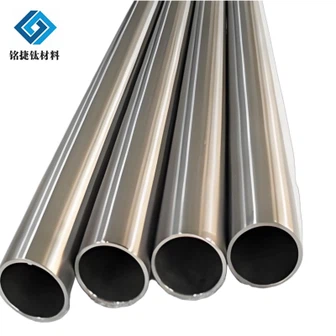
Furthermore, processing titanium ingots is a challenging process, as titanium metal has poor plasticity and ductility, making it prone to cracking, deformation, and hardening. Processing titanium ingots primarily involves forging, rolling, and annealing, requiring the use of high-temperature, high-pressure, and high-speed equipment, as well as multiple heat and cold treatments, to produce titanium plates, tubes, rods, and other materials. These processes consume significant amounts of energy and materials, resulting in loss of titanium material and the generation of waste, increasing processing costs.

In summary, the smelting and processing of titanium involves multiple steps, each of which requires the use of high-end equipment and materials, and can also cause considerable pollution. These factors contribute to the high production cost and high price of titanium.
However, the performance advantages of titanium also make it irreplaceable in many fields, and therefore, the demand for titanium is also growing. In order to reduce the production cost of titanium and improve its utilization rate, relevant scientists and engineers have been exploring and researching new titanium preparation and processing methods, hoping to make titanium more popular and convenient.
Titanium was first extracted from ore in 1910, and since then, the refining and manufacturing processes for titanium alloys have been greatly improved. For example, my country's titanium alloy production has increased from 200 tons in the last century to 150,000 tons today, ranking first in the world. We believe that with the continuous advancement of technology, we will be able to develop more efficient and cost-effective processes, making titanium more cost-effective.