

What is the thermal conductivity of titanium foil?
As a supplier of titanium foil, I often receive inquiries from clients about the various properties of titanium foil, and one question that comes up quite frequently is, "What is the thermal conductivity of titanium foil?" In this blog post, I'll delve into the details of thermal conductivity, explain what it means for titanium foil, and discuss how it impacts different applications.
Understanding Thermal Conductivity
Before we get into the specifics of titanium foil, let's first understand what thermal conductivity is. Thermal conductivity, denoted by the symbol "k," is a measure of a material's ability to conduct heat. It is defined as the quantity of heat (Q) transmitted through a unit thickness (L) of a material in a direction normal to a surface of unit area (A) due to a unit temperature gradient (ΔT) under steady-state conditions. The SI unit for thermal conductivity is watts per meter-kelvin (W/(m·K)).
Materials with high thermal conductivity can transfer heat quickly, while those with low thermal conductivity are poor conductors and act as insulators. For example, metals like copper and aluminum are known for their high thermal conductivity, which is why they are commonly used in heat exchangers and electrical wiring. On the other hand, materials like wood and plastic have low thermal conductivity and are used for insulation purposes.
Thermal Conductivity of Titanium Foil
Titanium is a metal with relatively low thermal conductivity compared to other common metals. The thermal conductivity of pure titanium at room temperature (around 25°C or 298 K) is approximately 21.9 W/(m·K). However, the thermal conductivity of titanium can vary depending on several factors, including its purity, alloy composition, and temperature.
When titanium is alloyed with other elements, its thermal conductivity can change significantly. For example, some titanium alloys may have slightly higher or lower thermal conductivity than pure titanium, depending on the specific alloying elements and their concentrations. Additionally, the thermal conductivity of titanium generally increases with increasing temperature, although the rate of increase is relatively small compared to some other metals.
Impact of Thermal Conductivity on Applications
The thermal conductivity of titanium foil plays a crucial role in many applications. Here are some examples of how it affects different industries:
Aerospace Industry
In the aerospace industry, titanium foil is used in a variety of components, including heat shields, engine parts, and structural elements. The relatively low thermal conductivity of titanium can be an advantage in some applications, as it helps to reduce heat transfer and protect sensitive components from high temperatures. For example, titanium heat shields can be used to protect electronic equipment and other critical components from the intense heat generated by engines and re-entry into the Earth's atmosphere.
Chemical Processing Industry
In the chemical processing industry, titanium foil is often used in heat exchangers, reactors, and other equipment that comes into contact with corrosive chemicals. The combination of titanium's corrosion resistance and its moderate thermal conductivity makes it an ideal material for these applications. Titanium heat exchangers can efficiently transfer heat between different fluids while resisting corrosion, ensuring long-term reliability and performance.
Medical Industry
In the medical industry, titanium foil is used in a variety of applications, including dental implants, orthopedic devices, and surgical instruments. The low thermal conductivity of titanium can be beneficial in these applications, as it helps to minimize heat transfer to surrounding tissues during surgical procedures. This can reduce the risk of tissue damage and improve patient outcomes.
Electronics Industry
In the electronics industry, titanium foil is used in some applications where heat dissipation is a concern. Although titanium's thermal conductivity is not as high as that of some other metals, it can still be used in certain electronic components to help manage heat. For example, titanium foil can be used as a heat spreader in some high-power electronic devices to distribute heat more evenly and prevent overheating.
Our Titanium Foil Products
At our company, we offer a wide range of titanium foil products with different thicknesses, widths, and alloy compositions to meet the diverse needs of our customers. Our titanium foils are manufactured using high-quality raw materials and advanced production processes to ensure excellent quality and performance.
We understand that the thermal conductivity of titanium foil is an important factor for many of our customers, and we can provide detailed information about the thermal conductivity of our products upon request. Whether you need titanium foil for aerospace, chemical processing, medical, or electronics applications, we have the expertise and resources to help you find the right solution.
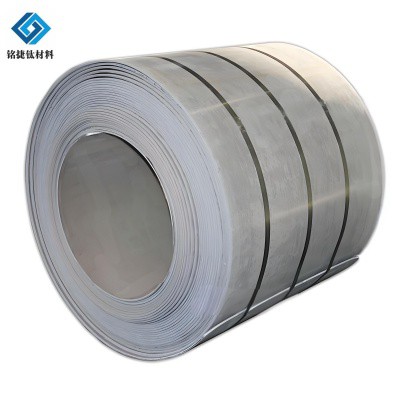
If you're interested in learning more about our Titanium Strips and foils, please don't hesitate to contact us. Our team of experts is ready to assist you with your inquiries and provide you with personalized recommendations based on your specific requirements.
Conclusion
In conclusion, the thermal conductivity of titanium foil is an important property that affects its performance in various applications. While titanium has relatively low thermal conductivity compared to some other metals, this can be an advantage in certain applications where heat transfer needs to be minimized. At our company, we are committed to providing high-quality titanium foil products that meet the highest standards of quality and performance. If you have any questions or need more information about our products, please contact us today to start a discussion about your procurement needs.
References
- Incropera, F. P., & DeWitt, D. P. (2002). Fundamentals of Heat and Mass Transfer. Wiley.
- Callister, W. D., & Rethwisch, D. G. (2010). Materials Science and Engineering: An Introduction. Wiley.
- ASM Handbook, Volume 2: Properties and Selection: Nonferrous Alloys and Special-Purpose Materials. ASM International.