

What is the shear strength of titanium foil?
As a supplier of titanium foil, I often receive inquiries about its various properties, and one question that comes up quite frequently is, "What is the shear strength of titanium foil?" In this blog post, I'll delve into this topic, exploring the concept of shear strength, its significance for titanium foil, and how it impacts different applications.
Understanding Shear Strength
Before we discuss the shear strength of titanium foil specifically, let's first understand what shear strength means. Shear strength is the maximum amount of shear stress a material can withstand before it fails. Shear stress occurs when two parallel forces act in opposite directions on a material, causing one part of the material to slide or deform relative to another part. For example, when you use scissors to cut a piece of paper, the paper experiences shear stress, and if the force is strong enough, the paper will be cut - this is the point where the shear strength of the paper has been exceeded.
In engineering and material science, shear strength is a crucial property as it helps in determining the suitability of a material for a particular application. Materials with high shear strength are often used in applications where they need to resist forces that try to cause internal sliding or deformation, such as in structural components, fasteners, and cutting tools.
Shear Strength of Titanium Foil
Titanium is a remarkable metal known for its high strength - to - weight ratio, excellent corrosion resistance, and biocompatibility. When it comes to titanium foil, its shear strength is influenced by several factors, including the alloy composition, the thickness of the foil, and the manufacturing process.
Alloy Composition
Titanium comes in various alloys, each with its own unique set of properties. For instance, commercially pure titanium (CP titanium) has different mechanical properties compared to titanium alloys like Ti - 6Al - 4V. CP titanium is known for its good formability and corrosion resistance, but its shear strength may be lower compared to some high - strength titanium alloys. Ti - 6Al - 4V, on the other hand, is a widely used alloy in aerospace and other high - performance applications due to its high strength and good fatigue resistance. The addition of aluminum and vanadium in this alloy enhances its shear strength and other mechanical properties.
Foil Thickness
The thickness of the titanium foil also plays a significant role in determining its shear strength. Generally, thicker foils tend to have higher shear strength than thinner ones. This is because a thicker cross - section can resist the shear forces more effectively. However, it's important to note that as the thickness increases, the flexibility of the foil decreases, which may not be desirable in some applications where flexibility is a key requirement.
Manufacturing Process
The way the titanium foil is manufactured can also affect its shear strength. Processes such as rolling, annealing, and heat treatment can alter the microstructure of the titanium, which in turn impacts its mechanical properties. For example, proper annealing can relieve internal stresses in the foil and improve its ductility and shear strength. On the other hand, improper manufacturing processes may introduce defects or inhomogeneities in the foil, which can reduce its shear strength.
Measuring the Shear Strength of Titanium Foil
To determine the shear strength of titanium foil, standardized testing methods are used. One common method is the punch - shear test. In this test, a circular punch is used to apply a shear force to a small specimen of the titanium foil. The force required to punch through the foil is measured, and from this, the shear strength can be calculated using appropriate equations.
Another method is the double - shear test, where a specimen is held between two supports and a force is applied to cause shear deformation at two points simultaneously. This test provides more accurate results as it simulates real - world loading conditions more closely.
Significance of Shear Strength in Applications
The shear strength of titanium foil is of great importance in many applications. Here are some examples:
Aerospace Industry
In the aerospace industry, titanium foil is used in various components such as aircraft skins, engine parts, and structural reinforcements. These components are subjected to complex loading conditions, including shear forces during flight. High shear strength is essential to ensure the structural integrity of these components and prevent failures. For example, in aircraft wings, the titanium foil used in the skin must be able to withstand the shear forces generated by air flow and aerodynamic loads.
Electronics Industry
In the electronics industry, titanium foil is used in printed circuit boards (PCBs), battery components, and electronic connectors. In PCBs, the foil needs to have sufficient shear strength to resist the forces that may occur during the manufacturing process, such as soldering and component assembly. In battery components, the shear strength of the titanium foil can affect the performance and reliability of the battery, especially in high - power applications.
Medical Industry
Titanium foil is also widely used in the medical industry due to its biocompatibility. It is used in implants such as dental implants, bone plates, and cardiovascular stents. These implants need to have high shear strength to withstand the mechanical forces exerted on them in the human body. For example, a dental implant must be able to resist the shear forces generated during chewing without failing.
Our Titanium Foil Products
As a leading supplier of titanium foil, we offer a wide range of products with different alloy compositions, thicknesses, and surface finishes to meet the diverse needs of our customers. Our titanium foils are manufactured using state - of - the - art technology and strict quality control measures to ensure high shear strength and other excellent mechanical properties.
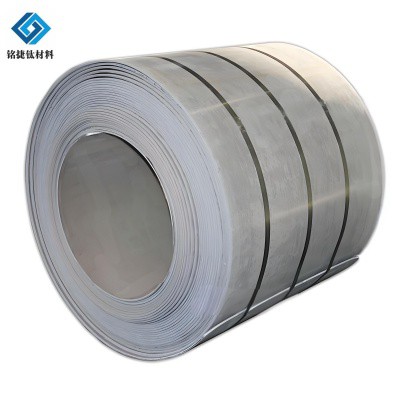
We provide Titanium Strips and foils that are suitable for various applications, from aerospace and electronics to medical and automotive industries. Whether you need a thin, flexible foil for a specific electronic application or a thick, high - strength foil for a structural component, we have the expertise and resources to provide you with the right solution.
Contact Us for Purchase and Discussion
If you are interested in our titanium foil products or have any questions about the shear strength or other properties of titanium foil, we encourage you to contact us. Our team of experts is ready to assist you in selecting the most suitable product for your application and can provide you with detailed technical information and samples.
We understand that every customer has unique requirements, and we are committed to providing personalized service to ensure your satisfaction. Whether you are a large - scale manufacturer or a small - scale researcher, we can work with you to meet your needs and help you achieve your goals.
References
- ASM Handbook Volume 2: Properties and Selection: Nonferrous Alloys and Special - Purpose Materials. ASM International.
- Titanium: A Technical Guide. Second Edition. John R. Davis (Editor). ASM International.
- "Mechanical Properties of Titanium Alloys" by Y. S. Na, S. H. Kim, and S. J. Kim. Journal of Materials Science and Technology.