

What is the density of titanium foil?
Titanium is a remarkable metal known for its exceptional strength, low density, and excellent corrosion resistance. Titanium foil, a thin and versatile form of this metal, has found widespread applications in various industries, from aerospace and electronics to medical and automotive. One of the fundamental properties of titanium foil is its density, which plays a crucial role in determining its performance and suitability for different applications. In this blog post, I'll delve into the density of titanium foil, its significance, and how it relates to our offerings as a titanium foil supplier.
Understanding Density
Before we explore the density of titanium foil, let's first understand what density means. Density is defined as the mass per unit volume of a substance. It is a characteristic property that helps us identify and compare different materials. The formula for density is:
[
\text{Density} (\rho) = \frac{\text{Mass} (m)}{\text{Volume} (V)}
]
The SI unit for density is kilograms per cubic meter (kg/m³), although other units such as grams per cubic centimeter (g/cm³) are also commonly used. A material with a high density has more mass packed into a given volume, while a material with a low density has less mass per unit volume.
Density of Titanium
Titanium has an average density of approximately 4.51 g/cm³ or 4510 kg/m³. This density is relatively low compared to many other metals, such as steel (around 7.85 g/cm³) and copper (about 8.96 g/cm³). The low density of titanium is one of its most attractive features, as it allows for the production of lightweight yet strong components. This property is particularly valuable in industries where weight reduction is critical, such as aerospace and automotive.
Density of Titanium Foil
The density of titanium foil is essentially the same as that of bulk titanium, which is around 4.51 g/cm³. However, it's important to note that the density can vary slightly depending on factors such as the purity of the titanium, the manufacturing process, and the presence of any alloying elements.
- Purity: High-purity titanium foils typically have a density closer to the theoretical value of 4.51 g/cm³. Impurities can increase the density slightly, as they add additional mass to the material.
- Manufacturing Process: The way the titanium foil is produced can also affect its density. For example, foils produced through cold rolling may have a slightly different density compared to those produced by other methods due to changes in the microstructure.
- Alloying Elements: Titanium is often alloyed with other elements such as aluminum, vanadium, and molybdenum to enhance its mechanical properties. These alloying elements can alter the density of the titanium foil. For instance, titanium-aluminum alloys generally have a lower density than pure titanium, while titanium-vanadium alloys may have a slightly higher density.
Significance of Density in Titanium Foil Applications
The density of titanium foil is a critical factor in many applications. Here are some examples of how density influences the performance and suitability of titanium foil in different industries:
- Aerospace Industry: In the aerospace industry, weight reduction is of utmost importance to improve fuel efficiency and increase payload capacity. Titanium foil's low density makes it an ideal material for manufacturing aircraft components such as wings, fuselages, and engine parts. By using titanium foil instead of heavier metals, aerospace engineers can significantly reduce the weight of the aircraft without compromising its strength and durability.
- Electronics Industry: Titanium foil is also used in the electronics industry for applications such as printed circuit boards (PCBs), capacitors, and shielding. Its low density allows for the production of lightweight electronic devices, which is desirable for portable and wearable electronics. Additionally, titanium foil's excellent corrosion resistance ensures the long-term reliability of electronic components.
- Medical Industry: In the medical field, titanium foil is used in various applications, including dental implants, orthopedic devices, and surgical instruments. The low density of titanium makes it comfortable for patients to wear and reduces the stress on the body. Moreover, titanium's biocompatibility and corrosion resistance make it a safe and reliable material for medical use.
- Automotive Industry: The automotive industry is constantly looking for ways to reduce vehicle weight and improve fuel efficiency. Titanium foil can be used in automotive components such as exhaust systems, engine valves, and suspension parts. Its low density helps to reduce the overall weight of the vehicle, leading to better performance and lower emissions.
Our Offerings as a Titanium Foil Supplier
As a leading supplier of titanium foil, we understand the importance of providing high-quality products with consistent density and performance. We offer a wide range of titanium foils with different thicknesses, widths, and purities to meet the diverse needs of our customers. Our titanium foils are manufactured using advanced production techniques and strict quality control measures to ensure they meet the highest industry standards.
Whether you're looking for pure titanium foil or titanium alloy foil, we have the expertise and resources to provide you with the right solution. Our team of experienced professionals can also offer technical support and guidance to help you select the most suitable titanium foil for your specific application.
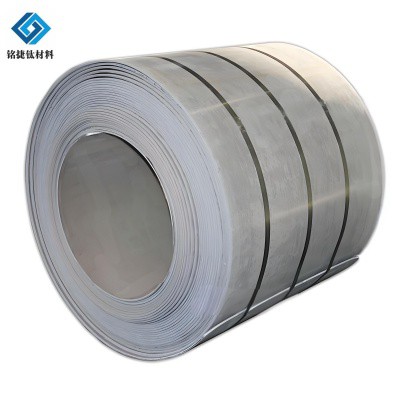
If you're interested in learning more about our Titanium Strips and foils, please feel free to contact us. We're always happy to discuss your requirements and provide you with a detailed quotation.
Conclusion
The density of titanium foil is an important property that influences its performance and suitability for various applications. With an average density of around 4.51 g/cm³, titanium foil offers a unique combination of low weight and high strength, making it a popular choice in industries such as aerospace, electronics, medical, and automotive. As a titanium foil supplier, we're committed to providing our customers with high-quality products that meet their specific needs. If you have any questions or would like to discuss a potential project, don't hesitate to reach out to us. We look forward to working with you.
References
- ASM Handbook Volume 2: Properties and Selection: Nonferrous Alloys and Special-Purpose Materials. ASM International.
- Titanium: A Technical Guide. Second Edition. J. R. Davis (Editor). ASM International.