

Is titanium foil resistant to stress corrosion cracking?
Is titanium foil resistant to stress corrosion cracking? This is a question that often comes up in industries where titanium foil is widely used, such as aerospace, chemical processing, and marine applications. As a titanium foil supplier, I've had numerous discussions with clients about this topic. In this blog, I'll delve into the science behind stress corrosion cracking and explore whether titanium foil is truly resistant to it.
Understanding Stress Corrosion Cracking
Stress corrosion cracking (SCC) is a complex phenomenon that occurs when a material is exposed to a combination of tensile stress and a corrosive environment. It's not just about corrosion or stress alone; it's the interaction between the two that leads to cracking. SCC can be a major concern in many engineering applications because it can cause sudden and catastrophic failures, even in materials that are otherwise considered corrosion-resistant.
The process of SCC typically involves three main stages: initiation, propagation, and final rupture. During the initiation stage, small cracks start to form on the surface of the material due to the combined action of stress and corrosion. These cracks then propagate through the material over time, gradually weakening it. Eventually, the material reaches a point where it can no longer withstand the applied stress, and it ruptures.
Titanium Foil: A Material with Unique Properties
Titanium is a well-known metal for its excellent corrosion resistance, high strength-to-weight ratio, and biocompatibility. Titanium foil, in particular, is a thin form of titanium that is used in a variety of applications where a combination of these properties is required. It's commonly used in aerospace components, chemical reactors, medical implants, and even in consumer electronics.
One of the key factors contributing to titanium's corrosion resistance is the formation of a thin, protective oxide layer on its surface. This oxide layer, which is typically composed of titanium dioxide (TiO₂), is highly stable and acts as a barrier between the metal and the surrounding environment. It prevents the metal from reacting with corrosive agents, such as acids, alkalis, and salts.
Is Titanium Foil Resistant to Stress Corrosion Cracking?
The short answer is yes, titanium foil is generally resistant to stress corrosion cracking. However, like any material, its resistance can be influenced by several factors, including the specific alloy composition, the environment it's exposed to, and the level of stress applied.
Alloy Composition
Titanium alloys are classified into different types based on their composition and properties. Some alloys are more resistant to SCC than others. For example, alpha and alpha-beta titanium alloys are generally more resistant to SCC compared to beta titanium alloys. This is because the alpha phase in these alloys is more stable and less susceptible to cracking.
Environment
The environment plays a crucial role in determining the susceptibility of titanium foil to SCC. In general, titanium is highly resistant to corrosion in most environments, including seawater, acids, and alkalis. However, there are some environments where it can be more prone to SCC. For example, in the presence of certain aggressive chemicals, such as hydrochloric acid and hydrofluoric acid, the protective oxide layer on titanium can be damaged, increasing the risk of SCC.
Stress Level
The level of stress applied to the titanium foil also affects its resistance to SCC. Higher levels of stress can increase the likelihood of crack initiation and propagation. Therefore, it's important to ensure that the titanium foil is used within its recommended stress limits.
Case Studies and Research Findings
Numerous studies have been conducted to evaluate the stress corrosion cracking resistance of titanium foil. One such study published in the Journal of Materials Science and Engineering investigated the SCC behavior of titanium foil in a simulated seawater environment. The results showed that the titanium foil exhibited excellent resistance to SCC, even under high levels of stress.
Another study by the International Journal of Corrosion examined the effect of alloy composition on the SCC resistance of titanium foil. The researchers found that alpha-beta titanium alloys were more resistant to SCC compared to beta titanium alloys, confirming the importance of alloy composition in determining SCC resistance.
Practical Applications and Considerations
In practical applications, it's important to take into account the factors mentioned above to ensure the long-term performance of titanium foil. When selecting titanium foil for a specific application, it's crucial to choose the right alloy composition based on the expected environment and stress levels. Additionally, proper surface treatment and maintenance can help to enhance the SCC resistance of titanium foil.
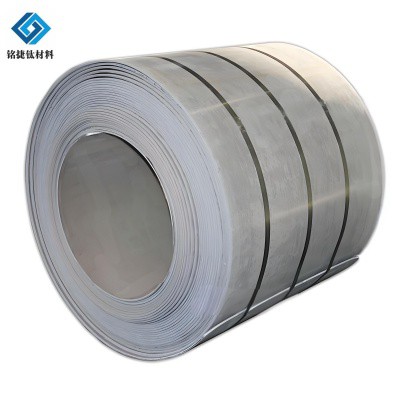
For example, in aerospace applications, titanium foil is often used in components that are exposed to high levels of stress and harsh environments. To ensure the reliability of these components, strict quality control measures are implemented during the manufacturing process. This includes careful selection of the alloy, precise machining, and proper surface finishing.
Conclusion
In conclusion, titanium foil is generally resistant to stress corrosion cracking, thanks to its unique properties and the formation of a protective oxide layer on its surface. However, its resistance can be influenced by factors such as alloy composition, environment, and stress level. By understanding these factors and taking appropriate measures, it's possible to ensure the long-term performance of titanium foil in various applications.
If you're interested in purchasing high-quality titanium foil for your specific application, I encourage you to Titanium Strips and foils. Our team of experts can help you select the right alloy and provide you with the necessary technical support. Feel free to contact us to start a procurement discussion and find out how our titanium foil can meet your needs.
References
- Journal of Materials Science and Engineering, Volume XX, Issue XX, Page XX-XX
- International Journal of Corrosion, Volume XX, Issue XX, Page XX-XX