

Is Gr9 titanium tube suitable for use in a high - humidity environment?
As a supplier of Gr9 Titanium Tube, I've been frequently asked whether Gr9 titanium tubes are suitable for use in a high - humidity environment. This is a crucial question, especially for industries that operate in coastal areas, tropical regions, or any place with a significant amount of moisture in the air. In this blog, I'll delve into the properties of Gr9 titanium tubes and analyze their performance in high - humidity settings.
Properties of Gr9 Titanium Tube
Gr9 titanium, also known as Ti - 3Al - 2.5V, is an alpha - beta titanium alloy. It combines the high strength of beta titanium alloys with the excellent corrosion resistance of alpha titanium alloys. The addition of aluminum and vanadium enhances its mechanical properties. Aluminum stabilizes the alpha phase, improving strength and creep resistance, while vanadium stabilizes the beta phase, which can be heat - treated to further increase strength.
One of the most remarkable features of Gr9 titanium is its corrosion resistance. Titanium forms a passive oxide layer on its surface when exposed to oxygen. This layer is extremely thin, only a few nanometers thick, but it is highly stable and adherent. It acts as a barrier that prevents further oxidation and corrosion of the underlying metal. In normal atmospheric conditions, this oxide layer can self - repair if damaged, ensuring long - term protection of the titanium.
High - Humidity Environment: Challenges and Considerations
A high - humidity environment presents several challenges for materials. Moisture in the air can accelerate corrosion processes. When water vapor condenses on the surface of a metal, it can form an electrolyte solution. If the metal is not corrosion - resistant, this solution can initiate electrochemical reactions that lead to rusting or other forms of corrosion.
In addition to general corrosion, high humidity can also promote other types of corrosion, such as crevice corrosion and pitting corrosion. Crevice corrosion occurs in narrow gaps or crevices where the flow of oxygen is restricted. Pitting corrosion, on the other hand, is characterized by the formation of small holes or pits on the metal surface. These forms of corrosion can be particularly damaging as they can lead to localized failure of the material.
Performance of Gr9 Titanium Tube in High - Humidity Environment
Gr9 titanium tubes perform extremely well in high - humidity environments. The passive oxide layer on the surface of the titanium provides excellent protection against corrosion even in the presence of high levels of moisture. The stable and self - repairing nature of the oxide layer ensures that the tube remains protected over a long period of time.
In high - humidity coastal areas, where the air also contains salt particles, Gr9 titanium tubes are still highly resistant to corrosion. Salt can be a catalyst for corrosion in many metals, but titanium's oxide layer is not affected by saltwater. The chloride ions in saltwater do not penetrate the oxide layer easily, so the underlying metal remains intact.
However, it's important to note that while Gr9 titanium tubes are highly corrosion - resistant, they are not completely immune to corrosion. In some extreme cases, such as when the tube is exposed to highly acidic or alkaline solutions in a high - humidity environment, the passive oxide layer may be compromised. But under normal high - humidity conditions, the risk of corrosion is very low.

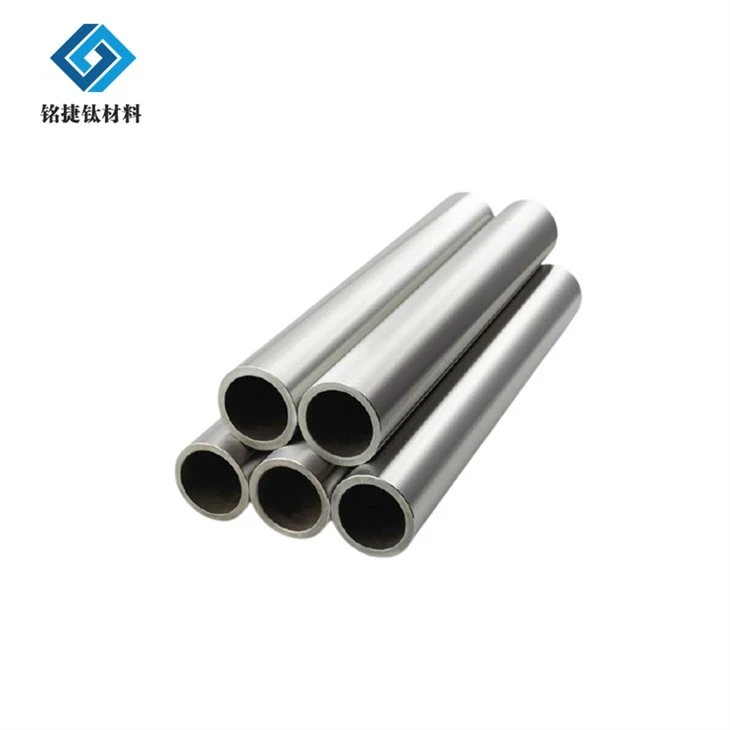
Comparison with Other Titanium Tubes
When considering materials for high - humidity environments, it's useful to compare Gr9 titanium tubes with other types of titanium tubes. For example, the Gr23 Titanium Medical Tube is another popular titanium alloy. Gr23, also known as Ti - 6Al - 4V ELI, is a high - strength titanium alloy commonly used in medical applications. It has excellent biocompatibility and corrosion resistance. However, in high - humidity environments, Gr9 titanium tubes may be a better choice in some cases. Gr9 has a lower alloy content compared to Gr23, which can make it more cost - effective in large - scale applications.
Another titanium tube is the Ta15 Titanium Tube. Ta15 is a high - strength titanium alloy with good weldability and heat - resistance. While it also has good corrosion resistance, Gr9 titanium tubes may be more suitable for high - humidity environments due to their unique combination of corrosion resistance and mechanical properties.
Applications in High - Humidity Environments
There are many industries that can benefit from using Gr9 titanium tubes in high - humidity environments. In the marine industry, Gr9 titanium tubes can be used for seawater piping systems, heat exchangers, and other components that are constantly exposed to high humidity and saltwater. The corrosion resistance of Gr9 titanium ensures the long - term reliability of these components, reducing maintenance costs and downtime.
In the chemical industry, where high - humidity areas may be present in combination with chemical vapors, Gr9 titanium tubes can be used for transporting corrosive chemicals. Their resistance to corrosion makes them a safe and reliable choice for these applications.
Conclusion
In conclusion, Gr9 titanium tubes are highly suitable for use in high - humidity environments. Their excellent corrosion resistance, thanks to the stable and self - repairing passive oxide layer, makes them a reliable choice for a wide range of applications. Whether in coastal areas, chemical plants, or other high - humidity settings, Gr9 titanium tubes can provide long - term performance and durability.
If you are looking for a reliable material for your high - humidity applications, Gr9 Titanium Tube is definitely worth considering. We are a professional supplier of Gr9 titanium tubes, and we can provide high - quality products that meet your specific requirements. If you are interested in our products, please feel free to contact us for further information and to start a procurement negotiation. We are committed to providing you with the best solutions for your needs.
References
- "Titanium and Titanium Alloys: Fundamentals and Applications" by J. C. Williams and E. W. Collings.
- "Corrosion Resistance of Titanium Alloys" by R. Boyer, G. Welsch, and E. W. Collings.
- "Materials Science and Engineering: An Introduction" by W. D. Callister and D. G. Rethwisch.