

How to anneal titanium foil?
As a reputable titanium foil supplier, I've had the privilege of working closely with clients across various industries, from aerospace to medical, who rely on high - quality titanium foil for their applications. One crucial process that often comes up in the use of titanium foil is annealing. In this blog, I'll share in - depth knowledge about how to anneal titanium foil, a process that can significantly enhance its mechanical properties and performance.
Understanding Titanium Foil and Its Properties
Titanium foil is known for its excellent corrosion resistance, high strength - to - weight ratio, and biocompatibility. However, during the manufacturing process, such as rolling or cold - working, the foil can become hard and brittle. This is where annealing steps in. Annealing is a heat - treatment process that involves heating the titanium foil to a specific temperature and then cooling it at a controlled rate. This helps to relieve internal stresses, improve ductility, and refine the grain structure of the foil.
The Annealing Process
Step 1: Preparation
Before you start the annealing process, it's essential to prepare the titanium foil properly. First, clean the foil to remove any surface contaminants such as oils, dirt, or oxides. You can use a mild solvent or a specialized metal cleaner. Make sure to rinse the foil thoroughly and dry it completely. Any impurities on the surface can cause uneven heating or oxidation during the annealing process, which may affect the final properties of the foil.
Next, cut the titanium foil into the desired size and shape if necessary. This is also a good time to inspect the foil for any visible defects such as cracks or tears. If you find any issues, it's best to address them before proceeding with annealing.
Step 2: Selecting the Annealing Temperature
The annealing temperature for titanium foil depends on several factors, including the alloy type and the desired properties of the final product. For commercially pure titanium foils, the annealing temperature typically ranges from 600°C to 800°C (1112°F to 1472°F). For titanium alloys, such as Ti - 6Al - 4V, the annealing temperature can be higher, usually between 700°C and 900°C (1292°F and 1652°F).
It's crucial to refer to the manufacturer's specifications or relevant industry standards when determining the exact annealing temperature. Using the wrong temperature can lead to over - annealing or under - annealing, both of which can have negative impacts on the foil's properties.
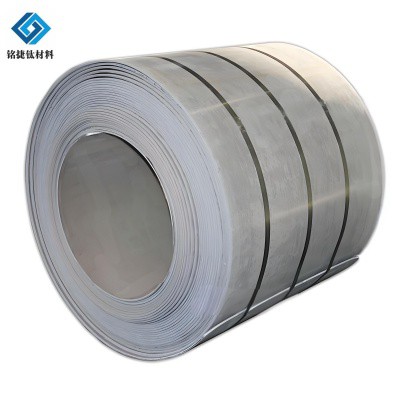
Step 3: Heating the Foil
Once you've determined the annealing temperature, it's time to heat the titanium foil. You can use a variety of heating methods, such as a furnace, induction heating, or a hot plate. If you're using a furnace, place the foil in a ceramic or graphite crucible to prevent it from coming into direct contact with the furnace walls, which can cause contamination.
Heat the foil at a slow and controlled rate to avoid thermal shock. A heating rate of 5°C to 10°C per minute is generally recommended. Monitor the temperature closely using a thermocouple or a pyrometer to ensure that it reaches the desired annealing temperature accurately.
Step 4: Holding Time
After the foil reaches the annealing temperature, it needs to be held at that temperature for a specific period. This holding time allows the internal stresses in the foil to relax and the grain structure to re - arrange. The holding time can vary from a few minutes to several hours, depending on the thickness of the foil and the annealing temperature.
For thinner foils, a shorter holding time may be sufficient, while thicker foils may require a longer time. As a general rule, for every 0.1 mm increase in foil thickness, the holding time may need to be increased by about 10 to 15 minutes.
Step 5: Cooling the Foil
The cooling rate is another critical factor in the annealing process. There are two main cooling methods: slow cooling (furnace cooling) and rapid cooling (quenching).
Slow cooling is often preferred for most applications as it allows the foil to cool gradually, which helps to achieve a more uniform grain structure and better mechanical properties. To slow - cool the foil, simply turn off the furnace and let it cool inside the furnace until it reaches room temperature. This can take several hours or even overnight.
Rapid cooling, or quenching, involves immersing the hot foil in a coolant such as water or oil. Quenching can result in a harder and stronger foil, but it also increases the risk of cracking and residual stresses. Quenching is typically used for specific applications where high strength is required, and the risks can be managed.
Post - Annealing Treatment
After annealing, it's a good idea to perform some post - annealing treatments on the titanium foil. First, clean the foil again to remove any scale or oxidation that may have formed during the annealing process. You can use a pickling solution or a mechanical cleaning method such as sandblasting.
Next, inspect the foil for any changes in its dimensions, surface finish, or mechanical properties. You can use various testing methods, such as hardness testing, tensile testing, or microscopic examination, to ensure that the annealing process has achieved the desired results.
Benefits of Annealing Titanium Foil
Annealing titanium foil offers several benefits. Firstly, it improves the ductility of the foil, making it easier to form, bend, and shape without cracking. This is especially important for applications such as jewelry making, where the foil needs to be manipulated into complex designs.
Secondly, annealing relieves internal stresses in the foil, which can improve its fatigue resistance. This is crucial for applications in the aerospace and automotive industries, where the foil may be subjected to repeated loading and unloading cycles.
Finally, annealing can enhance the corrosion resistance of the titanium foil by promoting the formation of a more stable oxide layer on the surface. This is beneficial for applications in harsh environments, such as marine or chemical processing.
Applications of Annealed Titanium Foil
Annealed titanium foil has a wide range of applications. In the medical field, it's used for implants such as dental implants and orthopedic plates due to its biocompatibility and improved formability after annealing. In the electronics industry, annealed titanium foil is used for shielding and capacitor applications because of its excellent electrical conductivity and mechanical properties.
The aerospace industry also relies heavily on annealed titanium foil for components such as heat shields and aircraft interiors. The foil's high strength - to - weight ratio and corrosion resistance make it an ideal material for these applications.
Why Choose Our Titanium Foil
As a titanium foil supplier, we offer high - quality titanium foils that are suitable for annealing. Our foils are made from the finest titanium alloys and are manufactured using state - of - the - art processes to ensure consistent quality. We also provide detailed technical support and guidance on the annealing process to help our customers achieve the best results.
If you're interested in Titanium Strips and foils, we have a wide range of options available in different thicknesses, widths, and alloy types. Our team of experts can assist you in selecting the right product for your specific application and provide you with all the necessary information on how to anneal it properly.
If you're looking to purchase titanium foil for your annealing needs, we encourage you to get in touch with us. We're here to answer all your questions, provide samples, and discuss your requirements in detail. Whether you're a small - scale manufacturer or a large - scale industrial user, we're committed to providing you with the best titanium foil products and services. Contact us today to start a fruitful business relationship.
References
- "Titanium: A Technical Guide", ASM International
- "Metallurgy and Processing of Titanium Alloys", John Wiley & Sons
- Industry standards and specifications related to titanium foil manufacturing and annealing.